
 Schedule
  (803) 327-2700
 AC Capacitor Cost: What to Expect Before You Call a Tech
When your ac unit hums but will not start, or shuts off unexpectedly on a hot afternoon, a failed air conditioner capacitor is often the culprit, sometimes leaving warm air blowing through the vents instead of cool air. Understanding ac capacitor cost before you call for service helps you budget with confidence and avoid feeling caught off guard by an unexpected repair bill. This guide breaks down what goes into the price, what affects it, and how homeowners can get an accurate estimate before committing to a repair.
What you’ll learn:
- What a typical AC capacitor replacement costs in 2026
- The main factors that push the price higher or lower
- Warning signs that your capacitor may be failing
- How DIY attempts compare to professional replacement
What Your AC Capacitor Cost Really Reflects
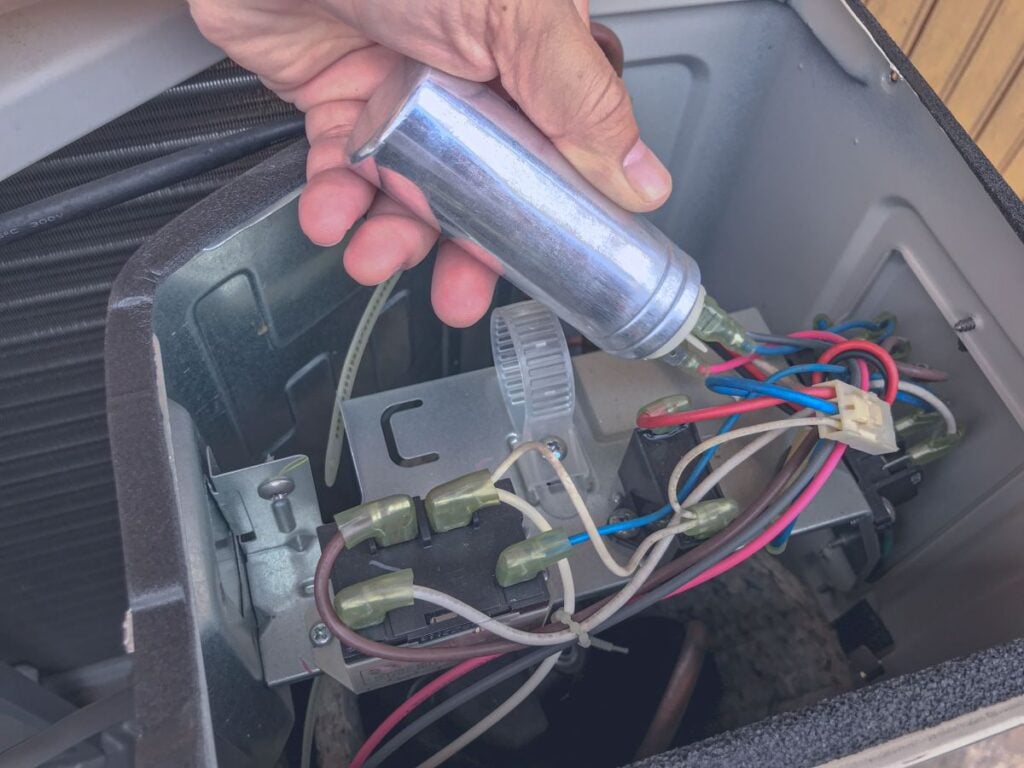
A capacitor is a small but essential part that stores energy and releases it to start and run both the compressor and blower motor, along with other internal components that keep your system running. Because it plays such a critical role, replacing a failed capacitor quickly restores your system to normal operation, but the price tag often surprises homeowners who expect a small part to come with a small bill. Understanding what you are actually paying for helps put the cost to replace this part in perspective and makes it easier to spot a fair quote from an inflated one.
- Affordable part, labor-driven price: Most ac capacitors cost between $8 and $50, while labor and diagnostic time make up the bulk of the total bill.
- Safety expertise included: Capacitors hold stored energy even when the system is off, capable of delivering a serious jolt, so professional replacement accounts for the training and tools needed to handle that risk safely.
- Protection against bigger repairs: A properly installed capacitor prevents added strain on the compressor and motors, which helps you avoid a much larger repair down the road.
- Peace of mind: A professional replacement typically comes with a warranty on both the part and the labor, something a DIY fix cannot offer.
For homeowners in York and surrounding areas, having a general sense of these costs ahead of time makes it much easier to evaluate a quote when a technician arrives and to ask informed questions about what is included. From there, it helps to understand exactly what drives the price up or down from one job to the next.
5 Factors That Shape Your AC Capacitor Cost
Several key factors influence what you will actually pay to replace an ac capacitor, and understanding them can help explain why one final price differs from another. Most homeowners can expect a full replacement, including parts and labor, to fall somewhere between $80 and $400, with many landing closer to $150 to $250 for a straightforward job.
1. Capacitor Type
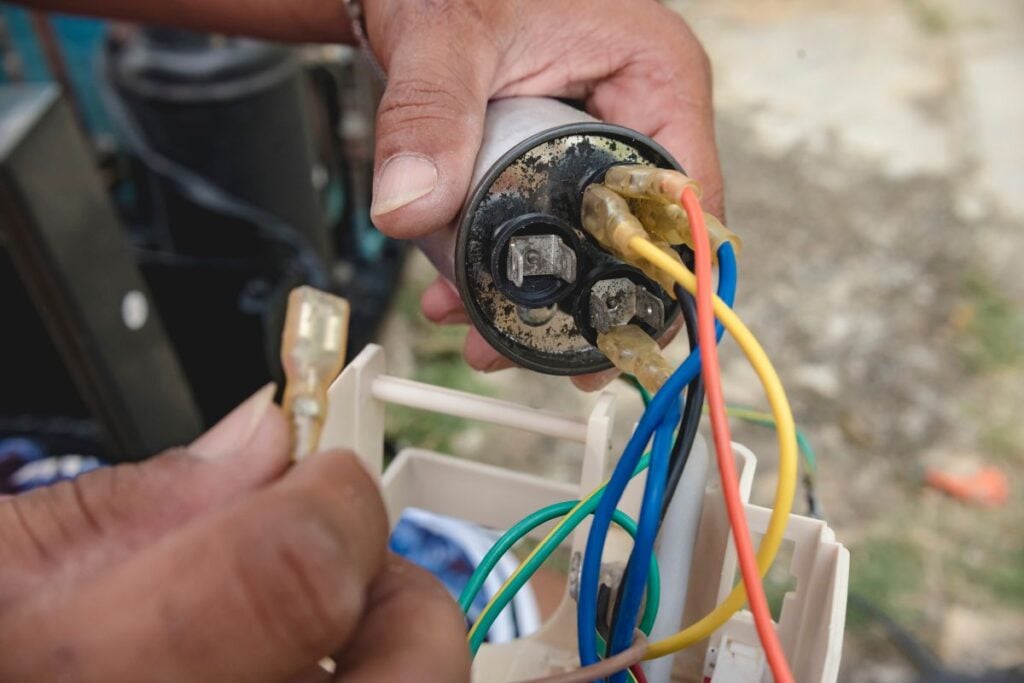
Air conditioners use either a single run capacitor or a dual run capacitor that combines the compressor and fan functions into one unit, and some systems also require a separate start capacitor. Dual run and start capacitors tend to cost more than a basic single run capacitor due to their more complex construction.
- Single run capacitors are generally the least expensive option
- Dual run capacitors cost more but are common on modern residential units
- Start capacitors, often found on older systems, add to the total price
2. System Size and Tonnage
Larger air conditioning systems require capacitors with a higher voltage rating and greater capacitance, which increases both the part price and the complexity of installation on the outdoor condenser unit. A small residential unit will almost always cost less to service than a larger system supporting a bigger home.
- Higher microfarad ratings generally mean a higher part cost
- Larger systems may require additional testing after installation
- System tonnage is one of the first things a technician checks before quoting a price
3. Local Labor Rates
Labor typically accounts for the largest share of the total bill, with hourly rates commonly ranging from $60 to $150 depending on the region and the company. Because a capacitor swap itself does not take long, most of what you are paying for is the technician’s diagnostic expertise and travel time.
- Urban areas and larger companies often carry higher hourly rates
- Some companies quote a flat repair price instead of billing by the hour
- Experience level and licensing can also factor into labor pricing
4. Diagnostic and Service Call Fees
Many companies charge a separate diagnostic or service call fee to confirm the capacitor is actually the source of the problem before beginning any repair to restore power to your system. Some companies build this fee into an all-inclusive flat rate, while others list it separately on the final invoice, so it is worth asking upfront how pricing is structured.
- Diagnostic fees commonly range from $50 to $150 when charged separately
- Some companies waive the fee if you approve the recommended repair
- Asking for a written estimate before work begins helps avoid confusion later
5. Timing of the Repair
Emergency or after-hours service, particularly on evenings, weekends, or during a summer heat wave, often comes with an added fee on top of the standard repair cost. Scheduling a non-urgent replacement during normal business hours is one of the simplest ways to keep the total bill on the lower end of the range.
- After-hours or emergency calls can add a noticeable premium to the base price
- Peak summer months sometimes mean longer wait times as well as higher demand pricing
- Homes exposed to frequent power surges or prolonged heat exposure often see shorter capacitor life and may need a new capacitor sooner than average
- Scheduling routine maintenance can help catch a weakening capacitor before it fails completely
Taken together, these five factors explain most of the variation homeowners see between quotes. Knowing which of them apply to your situation makes it much easier to judge whether a quote you receive is reasonable.
Signs Your AC Capacitor Is Failing
Recognizing the common signs of a failing capacitor early can save you from a complete system failure during the hottest part of the year. Since capacitor failure tends to progress gradually before it fails completely, catching these signals early often means a simpler, less expensive repair rather than an emergency call after your system stops cooling altogether.
- Humming without starting: The system powers on and makes humming noises, but the compressor or fan does not engage.
- Delayed startup: The unit takes noticeably longer than usual to kick on after the thermostat calls for cooling.
- Frequent short cycling: The system turns on and off repeatedly without completing a full cooling cycle.
- Visible damage: A bulging, leaking, or swollen capacitor, sometimes with visible leaking oil, is a clear sign of a bad capacitor that needs to be replaced immediately.
- Reduced cooling output: Rooms take longer to cool, or the system runs constantly without ever reaching the set temperature.
If you notice any of these symptoms, it is best to schedule service quickly rather than waiting, since a capacitor that is already struggling puts extra strain on the compressor every time the system tries to start. Left unaddressed, an old capacitor can eventually take the compressor down with it, turning a modest repair into a far more expensive one.
DIY vs. Professional Capacitor Replacement
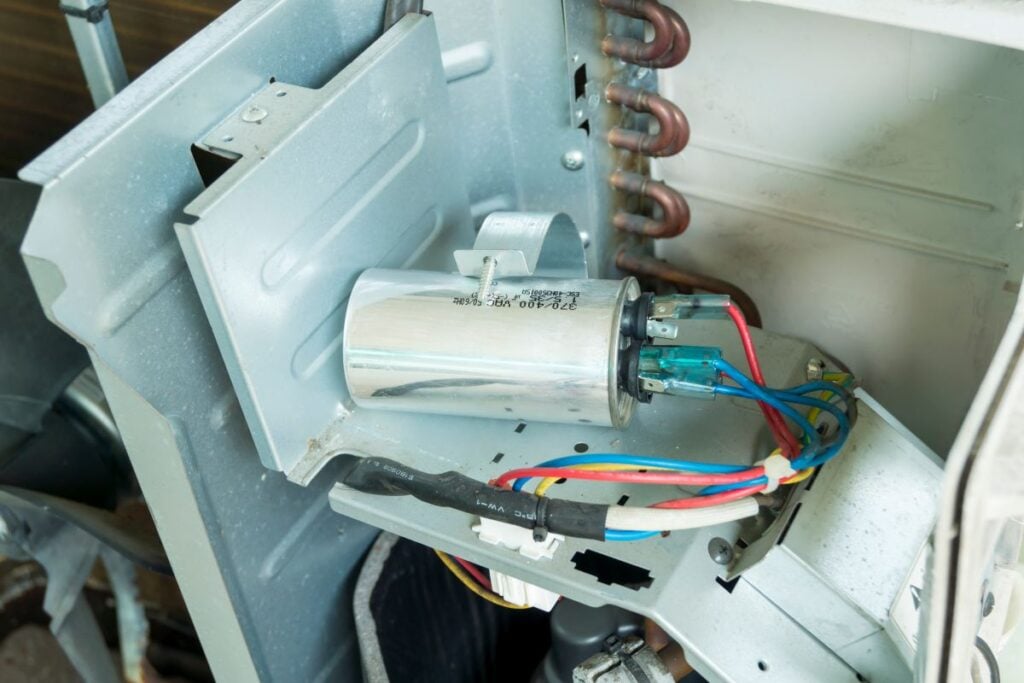
It might be tempting to save money by replacing a capacitor yourself, especially since the part itself is inexpensive and instructional videos make it look simple. However, capacitors store enough energy to deliver a high voltage jolt capable of serious injury even after the power is shut off, which is why professional installation by a qualified hvac technician is the safer choice for nearly every homeowner.
| Consideration | DIY Replacement | Professional Replacement |
| Upfront cost | Part only, roughly $8 to $50 | Full service, typically $80 to $400 |
| Safety risk | High, due to stored energy and voltage | Low, handled with an insulated tool and proper training |
| Correct sizing | Easy to select wrong microfarad rating | Verified against system specifications |
| Warranty protection | None on labor, may void equipment warranty | Often includes parts and labor warranty |
| Diagnostic accuracy | Assumes capacitor is the only issue | Confirms capacitor and checks proper airflow before replacing it |
Weighing these factors side by side makes it clear why most homeowners choose to leave capacitor replacement to a licensed technician rather than attempting it themselves. The modest savings from a DIY repair rarely outweigh the safety risk or the chance of misdiagnosing the actual problem, especially when a professional visit often costs less than homeowners initially expect.
Get a Fair AC Capacitor Cost from Panther HVAC
A failing capacitor is one of the more affordable AC repairs you can face, but only when it is diagnosed correctly and installed safely by a qualified hvac technician. At Panther HVAC, we help homeowners throughout York and surrounding areas get a clear, upfront price before any work begins, so there are no surprises on your final bill. Whether your system is humming without starting or has stopped cooling altogether, our team can quickly confirm whether a capacitor is the cause and get your ac back to peak performance. Scheduling annual tune ups is also one of the easiest ways to catch a weakening capacitor before it leads to a complete system failure.
If your air conditioner is showing signs of a failing capacitor, do not wait for a complete breakdown during the next heat wave. Contact us today for a fast, honest estimate and reliable repair from a team homeowners in York and surrounding areas trust.
