
 Schedule
  (803) 327-2700
 AC Short Cycling: Why It Happens and How to Fix It
Does this story sound familiar? Your air conditioning system turns on, runs for just a very brief period, then shuts off before it finishes cooling your home. You are dealing with AC short cycling, a constant on off cycle that keeps your ac system from settling into a steady cooling cycle. This does more than make your living room uncomfortable when a heat wave or the peak heat hits. It strains your entire system, drives up energy consumption, and signals a problem that worsens the longer it goes unaddressed, which is why catching these warning signs early can save you from a bigger repair bill down the road.
What you’ll learn:
- What air conditioner short cycling actually is and why it matters for your comfort and your wallet
- The most common causes of short cycling behind rapid on-off cycling
- How frequent short cycling quietly shortens the life of your HVAC system
- Simple ways to tell normal cycling apart from a real problem
- When to call in an HVAC professional versus what you can check yourself
Why AC Short Cycling Costs You More Than Comfort
Short cycling is rarely just an annoyance. When your ac system starts and stops repeatedly without completing a full cooling cycle, it is working harder while accomplishing less, and that imbalance shows up in more places than your thermostat’s set temperature. For homeowners in Pineville and surrounding areas, where summer humidity and heat put real demand on cooling systems, catching this issue early protects both your comfort and your budget, whether you rely on a heat pump or a traditional air conditioning system.
- Higher energy bills: Every startup draws a surge of electricity, so frequent short cycling wastes power without delivering steady cooling or good energy efficiency.
- Faster wear on parts: The compressor, fan motor, and electrical connections all take extra stress with each restart, which leads to increased wear and shortens their usable life.
- Uneven comfort and humidity control: Short bursts of cool air rarely have time to dehumidify a room properly, leaving your home feeling sticky even when the system shuts off and restarts constantly.
- Higher repair costs later: A system that short cycles is often flagging an underlying issue that can turn into more serious mechanical problems the longer it is ignored.
None of these outcomes are inevitable, though. Most causes of short cycling trace back to a handful of common issues, and once you know what to look for, resolving short cycling is often more straightforward than homeowners expect.
6 Common Causes of AC Short Cycling
Short cycling can come from something as simple as a dirty filter or as involved as a refrigerant leak, so it helps to work through the possibilities systematically. Below are the six causes of short cycling we see most often in homes throughout Pineville and surrounding areas, ranging from quick fixes to issues that demand professional attention.
1. An Oversized AC System
When an oversized ac system is too large for the space it serves, it cools the air quickly and shuts off before it can properly dehumidify or evenly distribute that cool air. This mismatch between equipment size and home size is one of the most common reasons a new or replacement HVAC system short cycles right out of the gate.
- Often traced back to incorrect load calculations during installation
- Leads to temperature swings and clammy indoor air even in a newly installed oversized system
- Usually requires a professional reassessment of equipment sizing rather than a simple repair
2. A Dirty or Clogged Air Filter
A blocked filter restricts airflow across the evaporator coil and through the return air vents, which can cause the coil to get too cold and trip the system controls meant to protect it. This is one of the easiest causes to prevent, yet it remains one of the most frequent culprits behind frequent short cycling.
- Restricted airflow makes it harder for the system to pull air through the home
- Frozen, restricted airflow often follows a clogged filter if the issue goes unaddressed
- Replacing or cleaning the filter every one to three months keeps fresh air moving and prevents this entirely
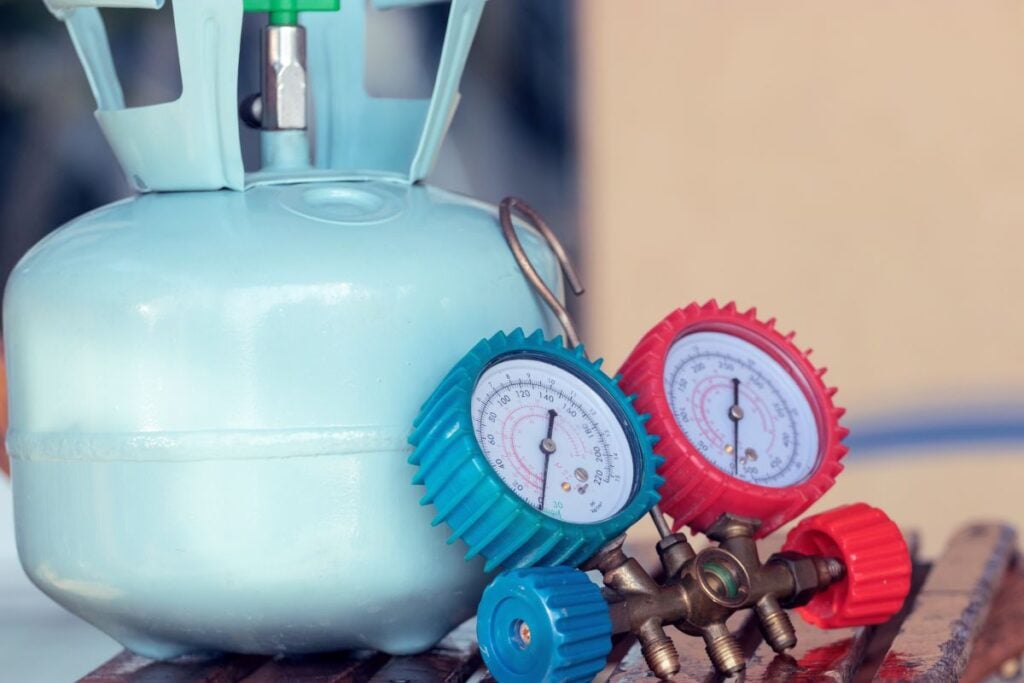
3. Low Refrigerant or a Refrigerant Leak
Refrigerant is responsible for absorbing heat from inside your home and carrying it outside, and when levels drop due to a leak, pressure inside the system becomes unstable. That instability can trigger the compressor to shut off early as a protective measure, creating the rapid, frequent short cycling pattern homeowners notice.
- Low refrigerant almost always points to a leak somewhere in the line set or coil
- Symptoms often include hissing sounds, ice buildup, or reduced cooling output
- This is a repair that requires licensed handling due to refrigerant regulations and safety
4. Thermostat Placement or Calibration Problems
A thermostat mounted near a heat source, in direct sunlight, or close to a supply vent can misread the actual temperature of your home. When it thinks the space has reached the set temperature faster than it truly has, this signals the system to shut off prematurely, only to call for cooling again minutes later.
- Common culprits include nearby lamps, sunny windows, and any other heat generating appliance
- Older or poorly calibrated thermostats can also misfire independent of placement
- Relocating the thermostat to a central location on an interior wall, or upgrading it, often resolves this without touching the AC unit itself
5. A Frozen Evaporator Coil
Ice forming on the evaporator coil blocks airflow and disrupts the normal heat exchange process, which can cause the system to cycle off in an attempt to protect itself. Freezing is often a downstream symptom of another issue on this list, such as restricted airflow or low refrigerant.
- Look for visible frost or ice on the indoor unit or refrigerant lines
- Turning the system off to let the coil thaw is a reasonable first step
- If freezing returns after thawing, a technician should identify the root cause
6. Electrical or Control Board Issues
Faulty wiring, worn out electrical components, a failing relay, or a damaged control board can send inconsistent signals to your AC, causing it to start and stop outside of a normal pattern. These electrical issues are less visible than a dirty filter or an iced coil, which makes them easy to overlook until the short cycling becomes frequent.
- Flickering lights or unusual sounds during cycling can be a clue
- Control board problems often worsen gradually rather than appearing all at once
- Fixing electrical issues requires licensed HVAC technicians who can safely diagnose faults
Working through these six causes in order, from the simplest filter check to the more technical electrical diagnosis, gives most homeowners a clear starting point. If the easy fixes do not resolve the pattern, it is a strong sign the issue lives deeper in the system.
The Hidden Cost of Ignoring Short Cycling
It is tempting to dismiss short cycling as a minor inconvenience, especially if the AC still seems to be cooling the house reasonably well. But the real cost of this issue tends to build quietly in the background, showing up on your utility bill and in your system’s lifespan long before it shows up as a total breakdown.
- Increased energy consumption: Every restart requires a burst of electricity that a normal, complete cooling cycle would not need, so a system cycling every few minutes adds up to real money over a billing period and chips away at overall energy efficiency.
- Accelerated component wear: Compressors and motors are engineered for a certain number of start-stop cycles over their lifetime, and short cycling burns through that allotment faster than intended use would, sometimes leading to compressor failure well before its expected lifespan.
- Reduced dehumidification: Cooling and dehumidifying both take time, and a system that shuts off early rarely removes enough moisture from the air, which is part of why homes with short cycling AC units can feel muggy despite constant activity from the unit.
- Compounding, potentially expensive repairs: A minor issue like a dirty filter can, if ignored, lead to a frozen coil, and a frozen coil left unaddressed can strain the compressor itself, turning an inexpensive fix into a costly repair involving the entire system.
Left unresolved, these hidden costs rarely stay hidden for long. Many homeowners in Pineville and surrounding areas find that addressing short cycling early, rather than waiting for a full system failure, is the difference between a routine HVAC service call and an emergency replacement.
Short Cycling vs. Normal Cycling: Knowing the Difference
Not every start and stop pattern is cause for concern, and understanding what counts as typical behavior can save you from unnecessary worry or, just as importantly, help you recognize a real problem before it escalates. Air conditioning systems are designed to cycle on and off as part of normal operation, so the key is knowing what separates a healthy, steady cooling cycle from one that needs attention.
| Behavior | Normal Cycling | Short Cycling |
| Run time per cycle | 10 to 20 minutes or more | Under 5 minutes |
| Frequency | A few cycles per hour on hot days | Constant restarts, sometimes every few minutes |
| Indoor comfort | Even temperature and humidity | Muggy air despite frequent operation |
| Sound pattern | Consistent hum during operation | Frequent startup noises and clicking |
| Energy bills | Predictable seasonal increase | Noticeable spike without added usage |
If your system’s behavior lines up more with the right-hand column, it is worth scheduling a professional inspection rather than waiting to see if the pattern resolves on its own. Recognizing these signs early gives homeowners the chance to address a small issue before it becomes a larger, more expensive one.
Keep Your System Running the Way It Should
AC short cycling is one of those issues that seems minor at first glance but quietly chips away at your comfort, your energy bills, and the lifespan of your equipment. The good news is that most causes, from a dirty filter to a misplaced thermostat, are diagnosable and fixable once a trained eye is on the problem. At Panther HVAC, our licensed HVAC technicians help homeowners get to the root of short cycling rather than just treating the symptoms, so your system runs the way it was designed to.
If your air conditioner has been cycling on and off more frequently than usual, do not wait for the problem to grow. Contact us today to schedule a free HVAC consultation and let our team take a closer look at your system so you can get back to reliable, even cooling all season long.
