
 Schedule
  (803) 327-2700
 Air Filter Replacement Cost: What to Expect in 2026
Replacing your HVAC air filter is one of the cheapest maintenance tasks a homeowner can do, yet most people have no idea what they are spending or whether they are buying the right filter for the money. Understanding air filter replacement cost before you head to the hardware store helps you avoid overpaying for features you do not need or underspending on a filter that leaves your system worse off. For homeowners who want to connect filter performance to the bigger picture of system care, a look at what comprehensive seasonal upkeep involves is a solid starting point.
What You’ll Learn:
- What drives the cost of air filters in 2026 and why prices vary so widely
- The main filter types and what each one typically costs
- How filter ratings like MERV, FPR, and MPR affect price and performance
- How often you should replace your filter based on your household
- Hidden costs that make cheap filters more expensive in the long run
- When professional filter guidance is worth the call
Why Air Filter Cost Is About More Than the Price Tag
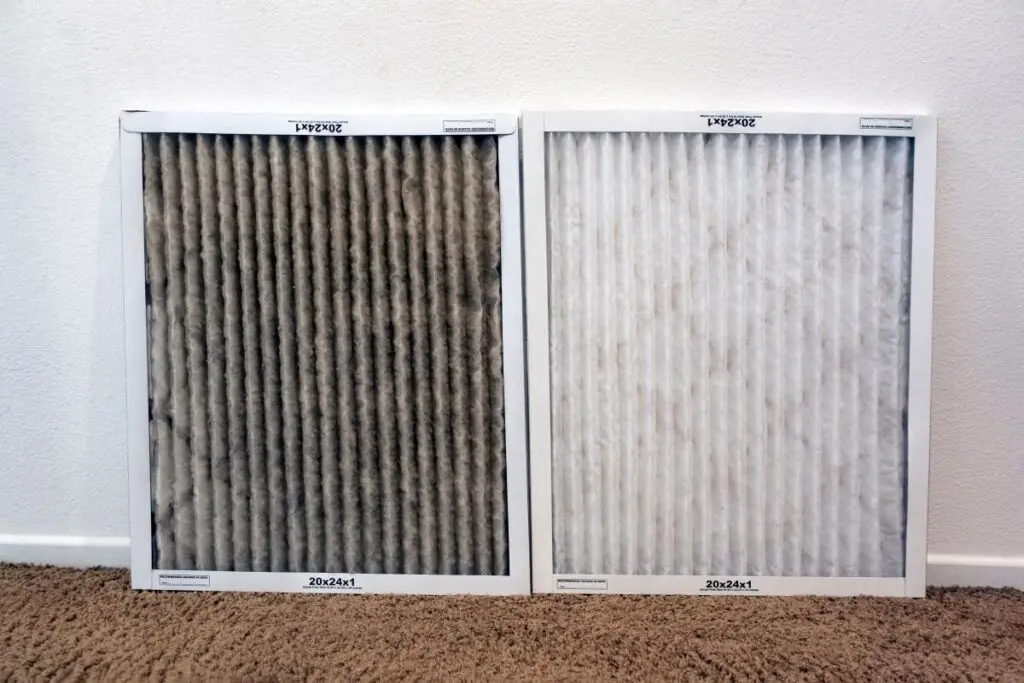
Most homeowners shop for filters by price alone. They grab the cheapest option on the shelf, install it, and assume the job is done. That approach consistently costs more over time than it saves upfront. The filter you choose affects how hard your HVAC system works, how clean your indoor air is, and how often you need to replace the filter itself. All three of those factors have real dollar values attached to them.
A filter that is too restrictive forces the blower motor to work against higher resistance, increasing energy consumption and accelerating wear on expensive components. A filter that is too permissive lets contaminants including dust, pollen, and fine debris through, settling on the evaporator coil and reducing heat transfer efficiency by up to 30 percent. A clogged filter restricts airflow in the same way regardless of how well it filtered when clean. Getting the price-to-performance balance right is what this guide is built around.
- Energy Bill Impact: A clogged or poorly matched filter increases HVAC energy consumption by up to 15 percent. On a system running through a full Carolina summer, that inefficiency adds up to a meaningful increase on every billing cycle.
- Equipment Protection: Particles that bypass a low-quality filter accumulate on the evaporator coil and inside the ductwork. Professional coil cleaning costs between $100 and $400. Choosing the right filter from the start is a fraction of that cost.
- Indoor Air Quality: Higher-rated filters capture allergens, mold spores, bacteria, and fine particulate matter that cheaper options allow to circulate. For households in Lake Wylie, SC and surrounding areas dealing with seasonal pollen and humidity-driven mold risk, that difference is felt daily.
- Total Cost of Ownership: A $2 fiberglass filter replaced monthly costs $24 per year. A $20 MERV 11 pleated filter replaced every 90 days costs $80 per year and delivers dramatically better performance. The right filter is not always the most expensive. It is the one that fits the system and the household’s needs.
Shopping for air filters with cost and performance in mind rather than price alone is what separates efficient homeowners from those who react to breakdowns.
5 Filter Types and What Each One Costs in 2026
Filter pricing in 2026 reflects a range of technologies, materials, and performance ratings. Standard sizes such as 16×20 or 20×25 are mass-produced and keep costs down, while custom or non-standard dimensions cost significantly more and may require ordering. For DIY buyers, the typical home HVAC air filter replacement cost runs $10 to $50. Prices below reflect retail ranges for standard residential sizes.
1. Fiberglass Panel Filters
Fiberglass filters are the cheapest option on the market, typically priced between $1 and $4 per filter. They are single-use disposable filters made of paper-thin fiberglass material. They carry a MERV rating of 1 to 4 and are designed primarily to protect HVAC equipment from large debris. They do almost nothing for indoor air quality. Pollen, pet dander, dust mite allergens, and mold spores all pass through unimpeded.
- Appropriate for systems that cannot handle higher filter resistance or households with no allergy or respiratory concerns
- Need replacement every 30 days, bringing annual cost to $12 to $48
- The lowest sticker price but the highest total cost when equipment damage from bypassed particles is factored in
2. Polyester and Basic Pleated Filters
Polyester and basic pleated filters typically cost between $4 and $12 per filter and carry MERV ratings of 5 to 8. The pleated design increases surface area compared to flat fiberglass panels, allowing the filter to capture more particles without significantly increasing airflow resistance. These are the workhorse option for most standard residential systems with no specific air quality demands.
- Capture large pollen particles, dust mite debris, and some mold spores at the higher end of the MERV range
- Replacement interval is typically every 60 to 90 days, bringing annual costs to roughly $16 to $72 depending on the model
- A reasonable balance of cost and performance for households without pets or active allergy conditions
3. High-Efficiency Pleated Filters (MERV 11 to 13)
Filters in the MERV 11 to 13 range are the recommended tier for allergy households and represent the sweet spot between performance and system compatibility. Retail prices typically run from $15 to $30 per filter for standard residential sizes. At MERV 11 to 13, these filters capture over 85 percent of particles in the 1 to 3 micron range, including pet dander, fine pollen fragments, smoke particles, and many bacteria.
- 3M’s Filtrete filters in the MPR 1500 to 1900 range and Home Depot’s FPR 9 to 10 filters fall into this performance category under different rating systems
- Replacement every 60 to 90 days is typical, though households with pets or allergy sufferers in Lake Wylie, SC and surrounding areas may need to replace closer to every 45 days during high-pollen season
- Annual cost typically runs $60 to $120 per year, significantly cheaper than the professional coil cleaning that poor filtration makes necessary
4. HEPA and Near-HEPA Filters
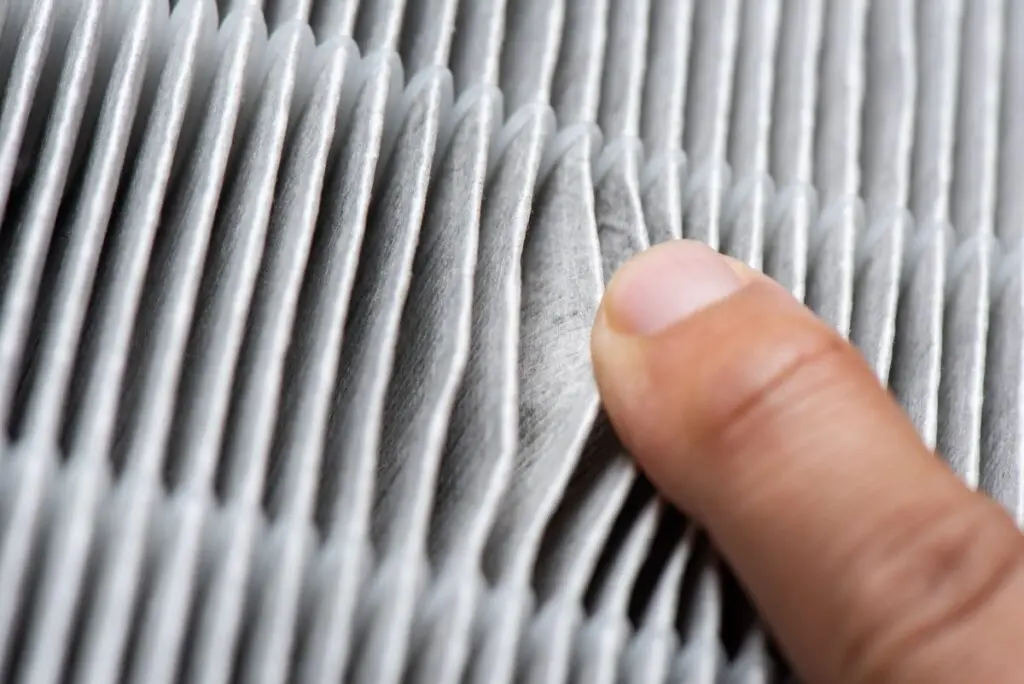
True HEPA filters capture 99.97 percent of particles at 0.3 microns. Most are designed for standalone air purifiers rather than central HVAC systems because their density creates static pressure that exceeds what residential ductwork handles. HVAC-compatible near-HEPA filters cost between $25 and $60 and offer similar performance with less airflow restriction. Whole-house deep media filters are a related option for specialized filter housings, priced between $50 and $300 depending on the model, and need replacement only once or twice a year.
- These filters are appropriate only for systems that have been confirmed by a technician to handle higher static pressure loads
- Installing a true HEPA filter in a system not designed for it can reduce airflow by 20 percent or more, increasing energy consumption and risking evaporator coil icing
- Annual cost for near-HEPA HVAC filters typically runs $100 to $240 per year depending on replacement frequency
5. Washable and Electrostatic Filters
Washable electrostatic filters are reusable filters made from durable synthetic materials, carrying a higher upfront cost of typically $20 to $80. They generate an electrostatic charge as air passes through the fiber layers, attracting particles to the filter surface. Their long-term appeal is obvious, but the performance picture is more nuanced.
- Capture efficiency declines over time as the electrostatic charge weakens with repeated washing
- Require monthly washing and thorough drying before reinstallation. A wet filter installed in the system can promote mold growth inside the air handler
- Best suited for households whose systems cannot tolerate the resistance of MERV 11 or higher pleated filters and where the ongoing cost of replacement filters is a primary concern
Each category carries a different cost profile, and the right choice depends on your system’s static pressure tolerance, your household’s air quality needs, and total annual cost rather than per-filter price.
What Filter Ratings Actually Mean for Your Wallet
Filter ratings are where most homeowners get confused, and that confusion often leads to overspending on filters the system cannot support or underspending on filters that underperform. Three rating systems appear on residential filter packaging in 2026, and they measure the same thing differently.
- MERV (Minimum Efficiency Reporting Value): The ASHRAE industry standard, running from 1 to 20 for all filter types. Residential systems typically operate best with filters in the MERV 8 to 13 range. Going above MERV 13 in a standard residential system creates static pressure that strains the blower motor and can cause evaporator coil icing.
- MPR (Microparticle Performance Rating): 3M’s proprietary scale measuring capture of particles between 0.3 and 1 micron. MPR 300 is roughly equivalent to MERV 7, MPR 1000 to MERV 11, and MPR 1500 to 1900 to MERV 12 to 13. Higher MPR filters cost more but capture the particle sizes most relevant to allergy and asthma households.
- FPR (Filter Performance Rating): Home Depot’s scale, running from 4 to 10. FPR 4 to 5 corresponds to MERV 6 to 8. FPR 9 to 10 corresponds to MERV 11 to 13. FPR ratings make cross-brand comparison easier when shopping in-store.
Understanding which rating system is on the filter in your hand, and where it falls in the MERV equivalent range, prevents the most common filter shopping mistake: paying a premium for a filter that rates lower than expected under a different scale.
How Replacement Frequency Changes the Real Cost Picture
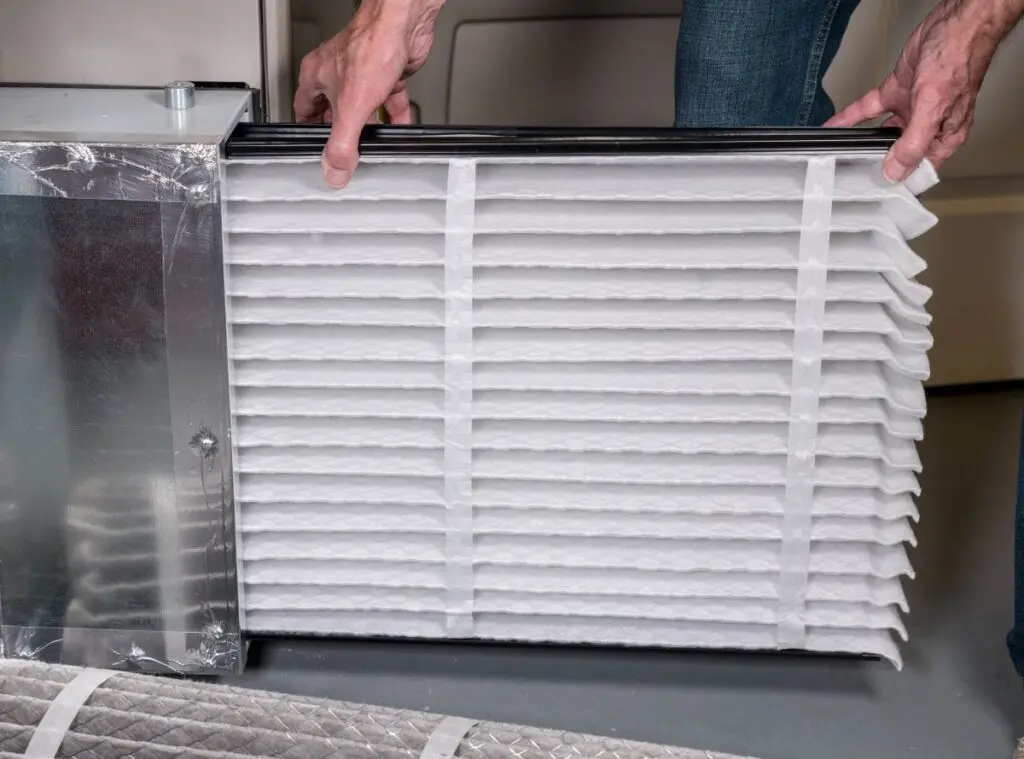
The sticker price of a filter is a poor indicator of what you will spend over a year. Most households go through 4 to 12 filters per year depending on pets, smoking, dust exposure, and local air quality. The replacement itself is a quick job that takes only a few minutes and no tools, so labor cost is not a factor for DIY homeowners. Homeowners in Lake Wylie, SC and surrounding areas should account for extended pollen seasons and high summer humidity when setting their schedule.
Low-Load Households
A single-occupant home with no pets, no smokers, and a well-sealed building envelope is a low-load environment. A MERV 8 pleated filter in this setting may last the full 90-day manufacturer-recommended interval. Annual cost at $8 to $12 per filter comes to roughly $32 to $48 per year, delivering adequate air quality at minimal expense.
Moderate-Load Households
A household with one or two pets, multiple occupants, or a home near a high-traffic road faces a higher particulate load. A MERV 11 filter may need replacement every 60 days rather than 90. Annual cost rises to $90 to $150, but the tradeoff is cleaner air and a coil that stays clean through a full cooling season without professional intervention.
High-Load Households
Households with multiple pets, active allergy or asthma conditions, recent renovation work, or smokers fall into the high-load category. These homes may require MERV 11 to 13 filter replacement every 30 to 45 days. Annual filter costs can reach $200 to $360, which still compares favorably to the $100 to $400 a dirty coil cleaning costs and the energy waste a neglected filter causes over the same period.
Matching replacement frequency to actual household conditions rather than defaulting to a fixed calendar date is the most efficient way to manage filter costs without sacrificing air quality or equipment protection.
Filter Costs Are the Smallest Part of the Equation
A filter is the front line of an HVAC system that costs thousands of dollars to install and hundreds more per year to operate. Getting that one component right ripples through every other maintenance and operating cost category. Panther HVAC helps homeowners in Lake Wylie, SC and surrounding areas find the right filter, confirm system compatibility, and address any efficiency issues that filtration alone cannot solve. Contact us today and let our team help you get it right.