
 Schedule
  (803) 327-2700
 Central AC Maintenance Checklist to Save Money
A neglected air conditioning system does not just break down at the worst possible time. It quietly drains your wallet through rising energy bills, shortened equipment life, and repairs that could have been avoided entirely. Staying on top of central AC maintenance is one of the most cost-effective habits a homeowner can build, and it does not have to be complicated. Whether you handle a few tasks yourself or prefer to leave it to the pros, knowing what a thorough seasonal tune-up covers puts you in a much stronger position heading into the cooling season.
What You’ll Learn:
- Why routine AC maintenance pays for itself over time
- A step-by-step checklist of the most important maintenance tasks
- How to identify warning signs before they become costly repairs
- The difference between DIY tasks and those that require a professional
- How seasonal timing affects the effectiveness of your maintenance routine
Why Skipping AC Maintenance Costs More Than You Think
Many homeowners put off routine maintenance because it feels like an extra expense, but the math works the other way. A well-maintained system runs more efficiently, lasts longer, and fails less often, which adds up to real savings year after year. For homeowners in Waxhaw, NC and surrounding areas, where summer cooling demand runs high for months at a stretch, those savings are even more meaningful.
The consequences of deferred maintenance build gradually and then hit all at once, usually during a heatwave when repair crews are booked solid and emergency service rates apply. Getting ahead of that starts with understanding what is at stake.
- Lower Monthly Energy Bills: Regular maintenance can prevent a 3 to 7 percent efficiency loss that builds quietly over time, showing up as higher energy bills each month. Dirty coils, clogged filters, and low refrigerant all force the system to work harder to produce the same amount of cooling.
- Extended Equipment Lifespan: Central AC units are built to last 15 to 20 years with proper care. Skipping maintenance can cut that lifespan nearly in half, turning a manageable maintenance cost into a full system replacement years ahead of schedule.
- Fewer Emergency Repairs: Most mid-season breakdowns trace back to a component that was showing signs of wear long before it failed. Routine inspections catch those warning signs early, when the fix is still minor and inexpensive.
- Better Indoor Air Quality: A maintained system filters and circulates air more effectively, reducing dust, allergens, and humidity levels inside your home. A neglected system can do the opposite, spreading contaminants through every room it serves.
Maintenance is not a luxury add-on. It is the baseline investment that protects everything else you have spent on your home’s comfort system.
6 Tasks That Matter Most: The Central AC Maintenance Checklist
Working through this checklist once a year, ideally in early spring before temperatures climb, gives your system the best foundation for the cooling season. Some tasks are simple enough for most homeowners to handle on their own. Others require a licensed HVAC technician with the tools and training to do them safely.
1. Replace or Clean the Air Filter
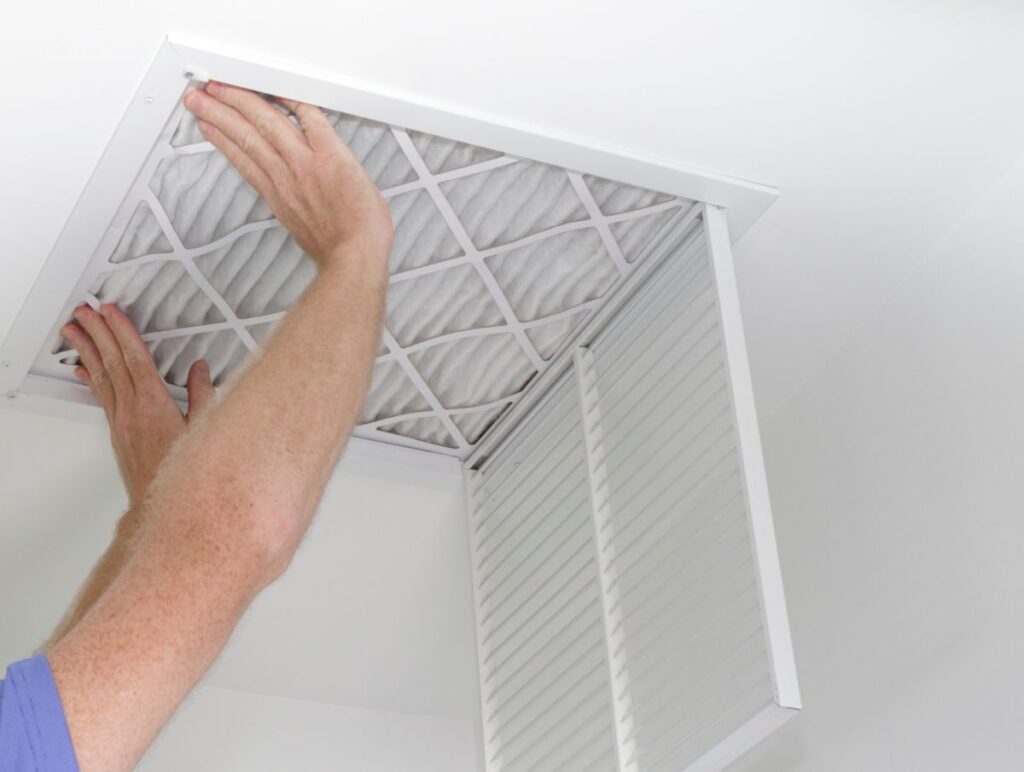
A dirty filter restricts airflow, strains the blower motor, and lets dust accumulate on internal components. Standard filters should be changed every two to three months, while some larger or higher-efficiency filters can last up to a year. Check yours monthly during peak season and replace it the moment you cannot see light through it.
- Match the MERV rating to your system’s specifications rather than defaulting to the cheapest option
- Keeping a fresh filter in place is the single easiest way to protect both air quality and system efficiency
2. Clean the Evaporator Coil and Condensate Drain Line
The evaporator coil absorbs heat from passing air, and a thin layer of grime on its surface reduces efficiency and can cause freezing. The condensate drain line removes the moisture your system pulls from the air. When it clogs, humidity builds back up inside the system and water can back up into the drain pan.
- Signs of a dirty coil include reduced cooling output, ice on the unit, and longer run cycles
- Pour a cup of distilled white vinegar into the drain line access point every few months to prevent algae buildup
- Make sure the outdoor unit stays level. A shifted unit can cause the drain pan to overflow and stress compressor components
3. Inspect and Clean the Condenser Unit
The outdoor condenser releases heat from your home and needs clear airflow on all sides to do it effectively. Leaves, grass clippings, and debris collect on and inside the unit throughout the year, especially in areas like Waxhaw, NC and surrounding areas where seasonal vegetation is dense.
- Clear at least two feet of space around all sides of the condenser
- Rinse the coil fins with a garden hose from the inside out to avoid pushing debris deeper
- Straighten bent fins with a fin comb, since bent fins restrict airflow just like a clogged filter
4. Check Refrigerant Levels
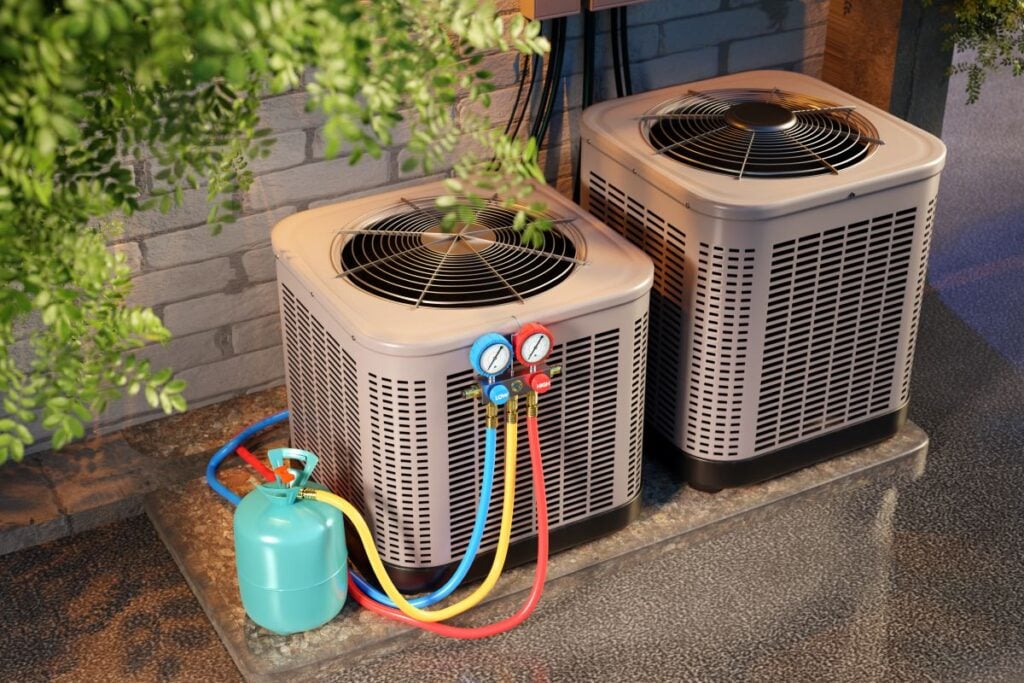
Refrigerant does not get consumed, so if levels fall below the manufacturer-specified range, there is a leak that needs to be found and repaired before the system is recharged. Low refrigerant causes poor cooling, higher energy consumption, and potential compressor damage. This task requires EPA certification and should always be handled by a licensed technician.
- Signs of low refrigerant include warm air from the vents, ice on the refrigerant lines, and a hissing or bubbling sound near the unit
5. Inspect Electrical Components and Moving Parts
Loose connections, corroded terminals, and worn capacitors are among the most common causes of mid-season failures. The same visit should cover lubrication of the blower and fan motors. When lubrication breaks down, friction builds heat and accelerates wear on components that are expensive to replace.
- A weakening capacitor often shows symptoms before it fails completely, making early detection straightforward
- A squealing or grinding sound from the unit is a common sign that lubrication is needed or bearings are failing
- This work should always be performed by a licensed technician with the unit powered down
6. Test the Thermostat and Check Ductwork
A miscalibrated thermostat causes your system to run longer than necessary or fall short of the set temperature. Confirm supply vents are open and return vents are unobstructed by furniture. While inspecting, look for visible duct disconnections or gaps at joints. Leaky ducts can waste 20 to 30 percent of conditioned air, sending it into attics and crawl spaces instead of the rooms you are cooling.
- Upgrading an older thermostat to a smart model can reduce energy consumption by 10 percent or more
- Ducts running through hot attic spaces should be wrapped in insulation to prevent heat gain
This checklist covers the core of what keeps a central AC system running reliably season after season. Working through it each spring puts you well ahead of most homeowners and gives your equipment the best chance of a long, trouble-free service life.
How to Know When It Is a DIY Task Versus a Pro Job
One of the most practical decisions in AC maintenance is knowing where your abilities end and where a licensed technician needs to take over. Getting that boundary wrong in either direction costs money.
Tasks most homeowners can handle:
- Filter replacement: Straightforward, requires no tools, and should be done regularly regardless of season
- Condensate drain maintenance: Adding vinegar to the drain access point is a simple preventive step
- Outdoor unit cleaning: Rinsing the condenser and clearing debris requires only a garden hose and basic awareness of the fins
- Thermostat checks: Verifying settings, replacing batteries, and checking for obvious display or response issues
Tasks that require a licensed HVAC technician:
- Refrigerant testing and recharging: Legally restricted to certified professionals and requires specialized equipment
- Electrical inspections: Working inside panels and disconnect boxes with live components is a safety risk without proper training
- Coil cleaning with chemical agents: Improper use of coil cleaners can damage fins or leave residue that reduces performance
- Ductwork pressure testing: Requires blower door equipment and the expertise to interpret results accurately
Drawing this line clearly keeps you productive on the tasks you can handle while ensuring the high-stakes work gets done correctly. For homeowners in Waxhaw, NC and surrounding areas who want a single visit to cover all the professional items, an annual tune-up is the most efficient and cost-effective approach.
Seasonal Timing: When to Schedule Each Part of Your Maintenance Routine
The best window for a professional tune-up is late February through April, before cooling season demand fills technician schedules. Most homeowners pay between $65 and $200, with the national average around $130, which is a fraction of what a single emergency repair costs. Homeowners in Waxhaw, NC and surrounding areas who book in early spring typically get faster appointment windows and can resolve any findings before the first heat wave arrives.
For the DIY side, a monthly filter check during peak season and a quick outdoor unit inspection after any major storm cost almost nothing and catch small problems early. Pairing those habits with an annual professional tune-up is all it takes to keep your system running reliably all season long.
Keep Your System Running Strong All Season
A little attention each year goes a long way toward protecting one of the most important systems in your home. Working through this checklist consistently means lower bills, fewer repairs, and the confidence that your system is ready when temperatures climb.
Panther HVAC is here to handle the professional side of your maintenance routine with the skill and thoroughness your system deserves. Whether you are due for an annual tune-up or dealing with a system that has not been serviced in years, our team is ready to help. Contact us today and let us make sure your central air conditioning system is set up for a reliable, efficient season.
