
 Schedule
  (803) 327-2700
 Commercial Air Duct Cleaning for Your Business in 7 Steps
Keeping your building’s air system in top shape is one of the most overlooked responsibilities a business owner faces. Commercial air duct cleaning directly affects the air quality your employees breathe, the efficiency of your HVAC system, and the energy costs you pay every month. If you’ve been keeping up with tasks like regular filter changes and seasonal tune-ups, you already understand how preventive care pays off over time. Neglecting your ductwork, though, is a gap that can quietly cost you more than you might expect.
What you’ll learn in this post:
- Why clean ductwork matters for commercial properties specifically
- The 7 key steps professionals follow during a commercial duct cleaning
- How to tell when your system needs attention
- What to look for when choosing a duct cleaning provider
- How duct cleaning compares to duct sealing and when you need both
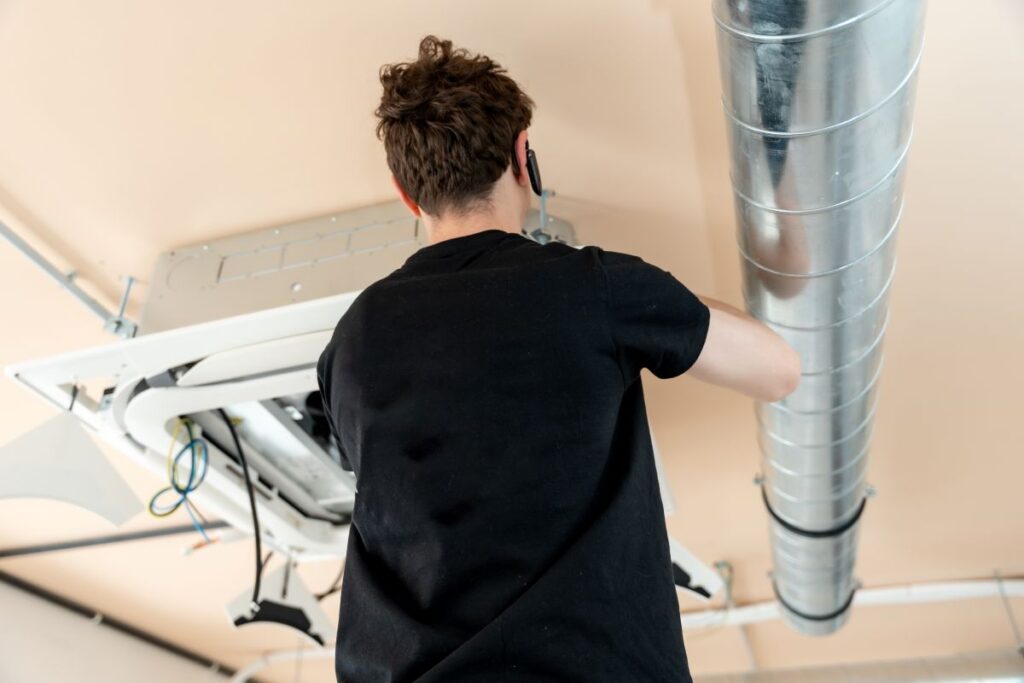
Why Commercial Duct Cleaning Is a Business Decision, Not Just a Maintenance Task
Most business owners think about duct cleaning the same way they think about repainting a break room: it’s nice to do eventually, but it rarely feels urgent. The reality is that for commercial properties, the stakes are much higher than they are in a single-family home. Your ductwork circulates air through spaces occupied by staff, customers, and vendors for hours on end, and buildup inside those ducts does not stay put.
Poor indoor air quality is one of the leading causes of employee sick days and reduced cognitive performance, according to research from the EPA and independent occupational health studies. In a commercial setting, that translates directly into productivity loss and potential liability. Beyond the human element, a duct system clogged with dust, debris, or microbial growth forces your HVAC equipment to work harder than it should, shortening the life of your units and driving up utility bills month after month.
Here is why Matthews and surrounding areas businesses specifically benefit from staying on top of this service:
- Improved air quality: Contaminants like dust, allergens, mold spores, and bacteria accumulate in ducts over time. Cleaning removes them before they recirculate through your occupied spaces.
- Lower energy costs: Restricted airflow makes your system run longer to hit the same temperature targets. Clean ducts reduce that strain and translate directly into savings on your monthly energy bill.
- Extended equipment lifespan: Dirt and debris wear down blower motors and coils. A clean system runs more efficiently and lasts longer between major repairs.
- Regulatory and lease compliance: Some commercial leases and industry regulations require documentation of routine HVAC maintenance, and duct cleaning records can satisfy those requirements.
Taking a proactive approach to duct maintenance is not a luxury for well-funded facilities teams. It is a straightforward investment that protects both your people and your equipment for the long term.
The 7 Steps Professionals Follow for Commercial Air Duct Cleaning
A thorough commercial duct cleaning is not a single action. It is a structured process that follows a specific sequence to ensure the entire system is addressed safely and completely. Understanding these steps helps you know what to expect and how to evaluate any contractor you hire.
Step 1: Initial Inspection and System Assessment
Before any equipment is turned on, a qualified technician performs a visual and sometimes camera-assisted inspection of the duct system. This helps identify blockages, signs of mold, pest activity, damaged insulation, or collapsed sections that need to be addressed separately. The inspection also determines the scope of the job and informs which cleaning method is most appropriate for your specific system.
Step 2: Protecting the Work Area
Commercial spaces present unique challenges compared to residential jobs. Technicians will seal off supply and return vents, cover sensitive equipment, and establish containment protocols so that loosened debris does not spread into occupied areas. This step is especially important in buildings that remain partially occupied during the cleaning.
Step 3: Connecting High-Powered Negative Pressure Equipment
Industrial-grade vacuum systems are connected to the duct network to create negative pressure throughout the system. This ensures that when debris is agitated and dislodged in later steps, it gets pulled toward the vacuum rather than blowing into your building. Commercial systems require significantly more powerful equipment than residential jobs, which is one reason hiring an experienced provider matters.
Step 4: Agitating Debris with Mechanical Brushes and Air Whips
Once negative pressure is established, technicians use rotating brushes, compressed air tools, and flexible whips to physically dislodge buildup from the interior walls of the ductwork. This step requires working section by section through the entire system to ensure no area is missed. For larger commercial buildings in Matthews and surrounding areas, this portion of the job can take several hours depending on system size and contamination level.
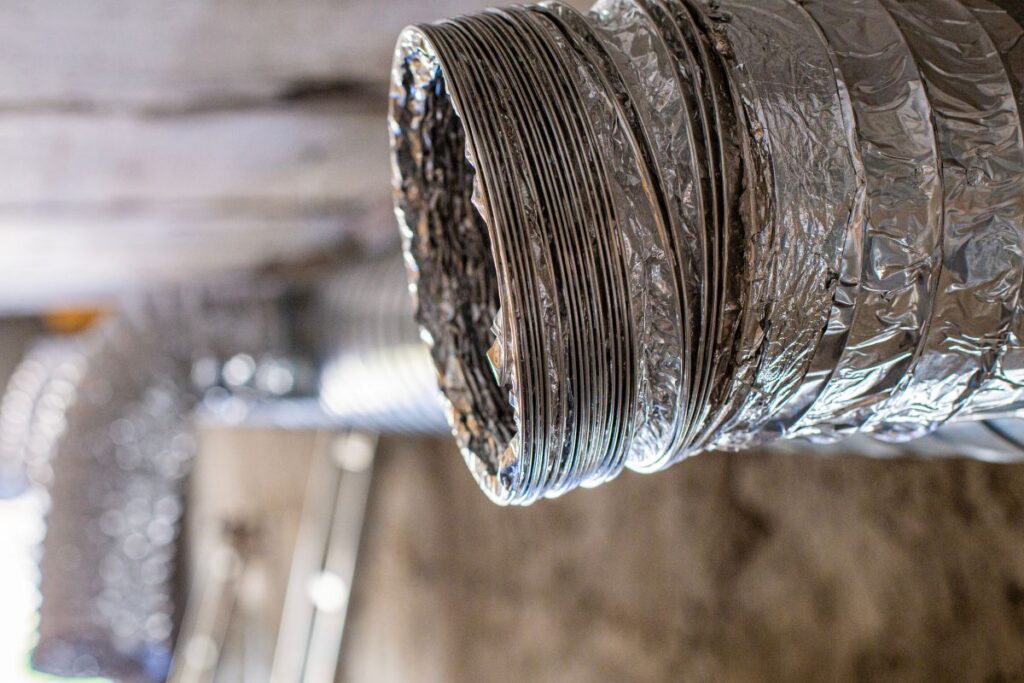
Step 5: Cleaning Registers, Grilles, and Diffusers
Supply and return grilles are removed, cleaned individually, and inspected before being reinstalled. These components collect a disproportionate amount of dust and often get skipped during routine janitorial cleaning. Addressing them as part of the duct cleaning process ensures that debris is not immediately reintroduced into the system after the main ductwork is clean.
Step 6: Sanitizing and Deodorizing (When Appropriate)
In situations where mold, bacteria, or persistent odors are present, technicians may apply EPA-registered antimicrobial treatments to the interior surfaces of the ductwork. This step is not always necessary for every job, and a reputable contractor will recommend it only when inspection findings support it. If your building has experienced water intrusion or elevated humidity, sanitizing is strongly worth discussing.
Step 7: Post-Cleaning Inspection and Documentation
A professional job ends with a second walkthrough to verify that all sections were addressed, all access panels are sealed, and the system is functioning correctly. You should receive documentation of the work performed, including notes from the inspection and any areas of concern identified for future attention. This paperwork is valuable for maintenance records, lease compliance, and warranty purposes.
Following these seven steps from start to finish is what separates a legitimate commercial duct cleaning from a surface-level pass that misses the actual contamination inside the system.
How to Know When Your Commercial System Needs Cleaning
Waiting for a fixed schedule is one approach, but certain signs indicate your system needs attention sooner. Many facilities managers in Matthews and surrounding areas do not realize their ductwork is overdue until the symptoms become impossible to ignore.
Visible Dust Around Vents
If you can see visible dust buildup on or around supply registers shortly after they have been wiped down, your ducts are likely releasing debris continuously into the space. This is one of the most reliable early indicators that a cleaning is overdue.
Uneven Airflow Between Zones
When some areas of your building feel noticeably warmer or stuffier than others despite identical thermostat settings, restricted ductwork is often the culprit. Partial blockages from debris, collapsed flex duct, or pest nesting materials can disrupt airflow distribution significantly.
Rising Energy Bills Without Explanation
If your utility costs have increased without a corresponding increase in occupancy or usage, your HVAC system may be compensating for restricted airflow by running longer cycles. Duct cleaning alone does not fix every efficiency problem, but it is one of the first things worth ruling out.
Persistent Odors or Allergy Complaints
Musty or stale odors that linger even after cleaning the space often originate in the duct system. Similarly, if multiple employees are reporting increased allergy symptoms or respiratory irritation at work, poor duct air quality may be contributing.
Addressing these signs early keeps the problem from compounding and protects your HVAC investment over time.
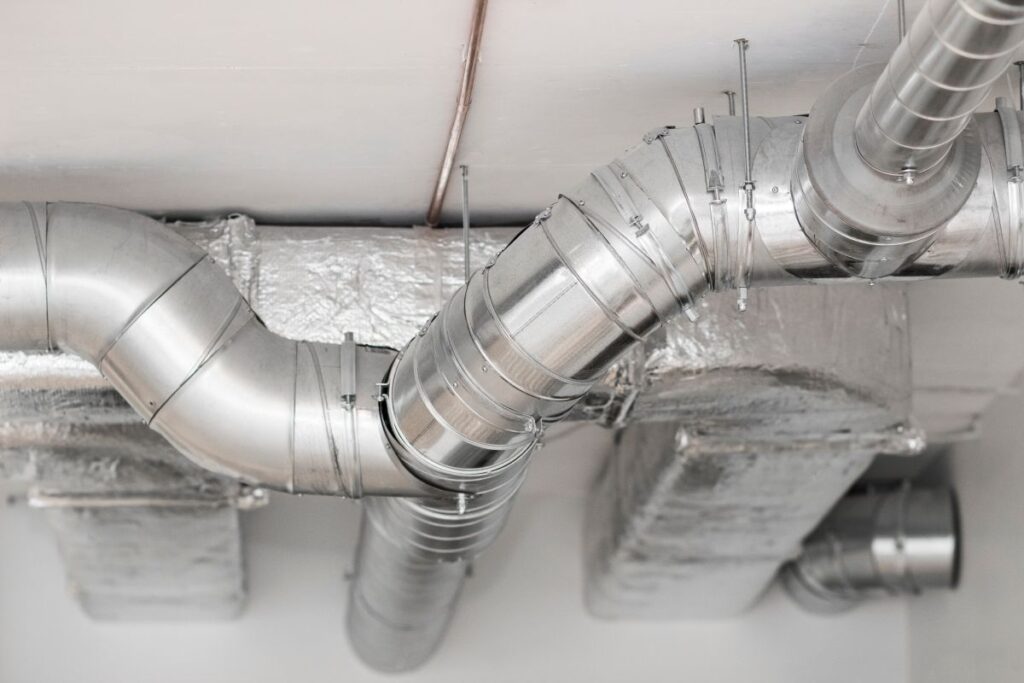
Duct Cleaning vs. Duct Sealing: Understanding the Difference
These two services are related but serve different purposes, and understanding the distinction helps you make smarter decisions about your building’s HVAC system. A qualified technician can assess your system during the initial inspection and recommend whether one or both services are appropriate for your situation.
| Service | What It Does | When You Need It |
| Duct Cleaning | Removes internal contamination, debris, and biological growth | Accumulated buildup, odors, allergen complaints, post-renovation |
| Duct Sealing | Closes gaps and leaks in the duct structure | Energy loss, uneven temperatures, high utility bills |
| Both Together | Full system restoration | Older systems, post-water-damage, buildings with long deferred maintenance |
Duct sealing addresses the structural integrity of the system, while duct cleaning addresses what is inside it. In many commercial buildings, especially older ones throughout Matthews and surrounding areas, both services are recommended together for the best outcome. Sealing leaky ducts after cleaning ensures the cleaned air is actually reaching the right zones rather than escaping into wall cavities or unconditioned spaces. Getting that professional opinion upfront saves you from paying for work you do not need or skipping work that would make a real difference.
Schedule Your Next Commercial Duct Cleaning with Panther HVAC
Clean ductwork is one of the most impactful and underappreciated ways to protect your building, your team, and your bottom line. Whether your system is overdue for service or you simply want a baseline inspection before problems develop, acting sooner rather than later is always the smarter call. Panther HVAC serves commercial properties throughout the region with the expertise, equipment, and professionalism the job demands. Do not wait for warning signs to stack up before taking action. Reach out to our team and contact us today to schedule your assessment and get a clear picture of what your system actually needs.
