
 Schedule
  (803) 327-2700
 Early Stage Signs of Black Mold in Air Vents to Watch For
Your HVAC system works hard to keep your home comfortable, but it can also become the perfect breeding ground for something far less welcome. Knowing the early stage signs of black mold in air vents can be the difference between a quick fix and a costly remediation project. Mold thrives in warm, humid conditions, and your ductwork provides exactly that environment year-round. If you want to stay ahead of the problem, keeping up with routine seasonal upkeep for your cooling system is one of the smartest things you can do as a homeowner.
What You’ll Learn:
- Why black mold in air vents is a serious health and home concern
- The seven most common early warning signs to watch for
- How humidity, poor airflow, and dirty filters contribute to mold growth
- How to tell mold apart from ordinary dust buildup
- When to call a professional and what to expect from remediation
Why Black Mold in Air Vents Is a Problem You Cannot Ignore
Most homeowners think of mold as a bathroom or basement issue, and they are not wrong to worry about those areas. However, air vents are often overlooked because they are out of sight, and that is exactly what makes them so dangerous. When mold colonizes your ductwork, every time your system runs, it sends spores throughout your entire living space.
The health consequences of prolonged mold exposure range from mild to severe, and the structural damage to your home can become significant over time. Getting ahead of this issue early protects both your family and your investment.
- Health Impacts Are Real: Mold spores can trigger allergic reactions, aggravate asthma, cause persistent headaches, and lead to respiratory infections, especially in children, the elderly, and anyone with a compromised immune system.
- Mold Spreads Faster Than You Think: Black mold can colonize new surfaces within 24 to 48 hours under the right conditions, meaning a small patch in one vent can quickly spread to connected ducts throughout your home.
- Your System’s Efficiency Suffers: A mold-covered interior restricts airflow and forces your HVAC unit to work harder, driving up energy bills and accelerating wear on components.
- Remediation Costs Grow Over Time: Catching mold early typically means a targeted cleaning. Letting it progress can result in full duct replacement and professional remediation that costs thousands of dollars.
Understanding why this matters is only half the battle. Knowing what to look for is what gives you the power to act before the problem spirals out of control.
7 Early Stage Signs of Black Mold in Air Vents to Watch For
Spotting mold in its early stages requires knowing where to look and what to pay attention to. These signs can show up subtly, and many homeowners mistake them for other HVAC issues. Here is what you need to watch for in your home in Pineville, SC and surrounding areas.
1. Visible Dark Spots Around Vent Covers
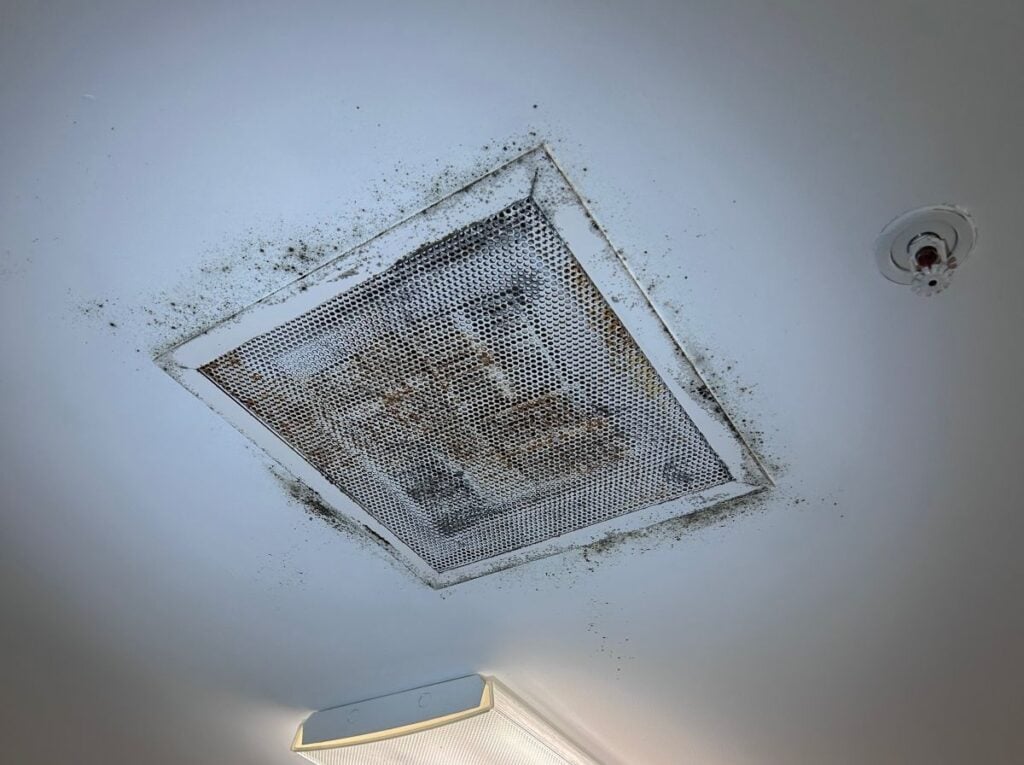
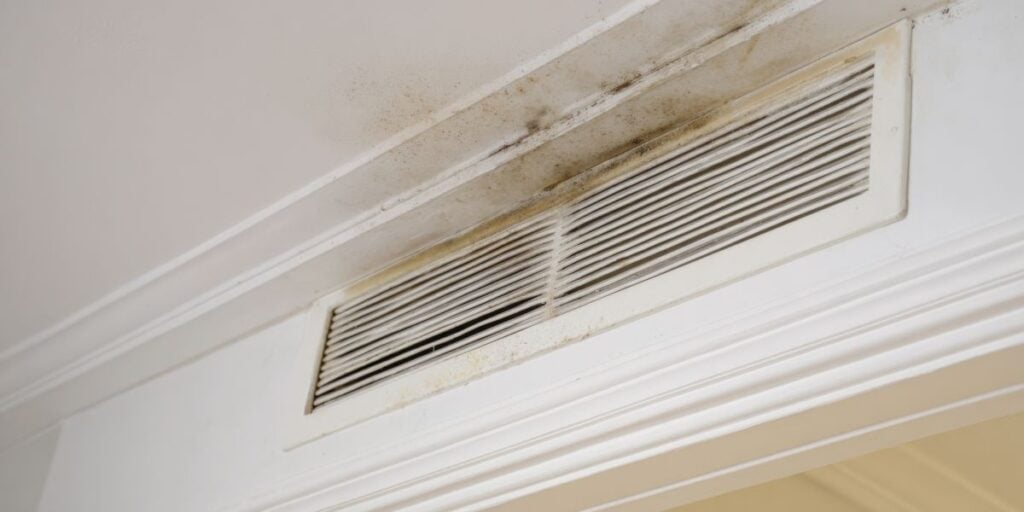
The most obvious sign is also the one that is easiest to dismiss as ordinary grime. Small dark specks or irregular patches around the edges of your vent covers, especially in shades of green-black or dark grey, are worth investigating immediately. Unlike dust, which wipes away cleanly, mold tends to leave a stain behind.
- Look for irregular, fuzzy, or powdery growth rather than flat discoloration
- Pay attention to the corners and grooves of the vent slats where moisture collects
- Check both supply and return vents since mold can colonize either
2. A Persistent Musty or Earthy Odor
One of the earliest and most reliable signs of mold in your ductwork is a smell you cannot track down. This musty, damp, or faintly earthy odor tends to be strongest right when your HVAC system kicks on, because the air movement is disturbing and circulating the spores.
- The smell may fade after the system has been running for a while, but it will return with each new cycle
- If the odor is present in multiple rooms simultaneously, mold in the ducts is a strong possibility
- A smell that worsens during humid summer months in Pineville, SC and surrounding areas is a key indicator
3. Allergy or Respiratory Symptoms That Improve Outdoors
Pay close attention to how you and your family feel inside versus outside your home. If symptoms like sneezing, coughing, watery eyes, or nasal congestion ease noticeably when you step outside, your indoor air quality is likely the culprit.
- Symptoms that are worse in rooms with active air vents point toward duct contamination
- Headaches and fatigue that persist at home but lift when you leave are common mold-related complaints
- Children and pets are often the first to show noticeable reactions since they spend more time at floor level near vents
4. Water Stains or Moisture Around Duct Openings
Mold needs moisture to grow, so signs of water intrusion near your vents are serious red flags. Discoloration, rust streaking on metal vent covers, or soft drywall around duct openings all suggest that condensation or a leak has been providing the moisture mold requires.
- Condensation inside ducts is especially common in humid climates during the cooling season
- Look for bubbling or peeling paint on walls and ceilings near supply vents
- Warped or stained ceiling tiles adjacent to ductwork are a strong indicator of moisture problems inside the system
5. Black or Dark Residue on or Near Filters
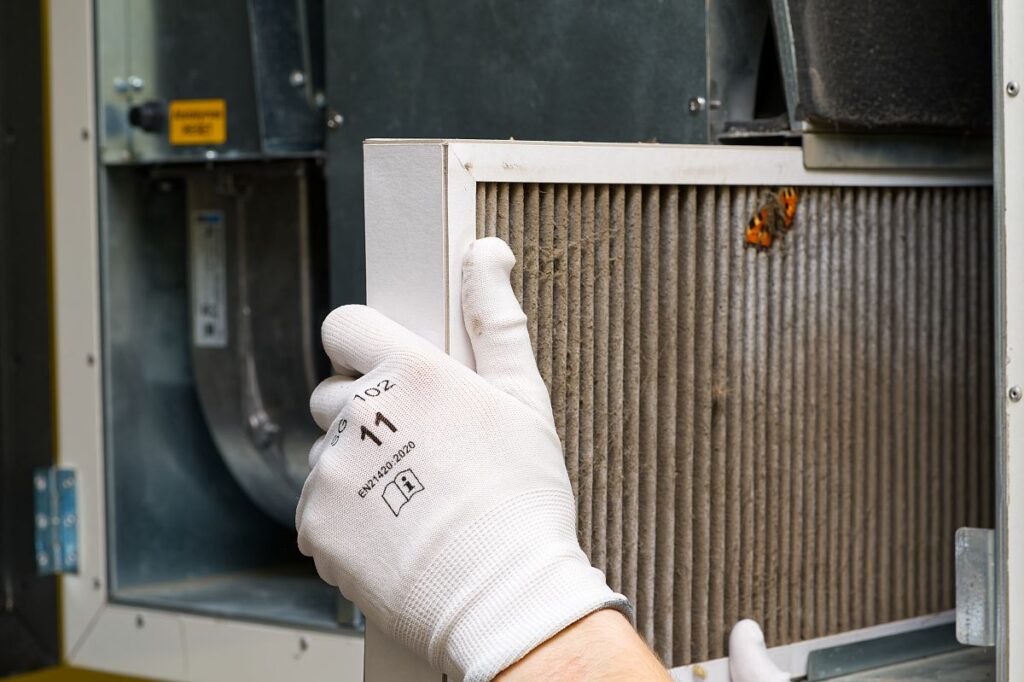
Your air filter is your system’s first line of defense, and it can reveal a great deal about what is traveling through your ducts. If you notice an unusual dark, greasy, or speckled residue on the filter that does not match the normal grey dust buildup, mold spores may already be circulating through the system.
- Replace filters and inspect them after just a week or two to see if the residue returns quickly
- Mold-laden filters often have an unmistakable musty smell even when freshly installed
- Filters that appear to be deteriorating faster than their rated lifespan may also be affected by mold-related biological activity in the duct system
6. Unexplained Spike in Humidity Levels Indoors
Mold and excess humidity are inseparable companions. If your home’s indoor humidity has crept above 50 to 60 percent without an obvious cause, and especially if it seems to rise when the HVAC system runs, the problem may originate inside the ductwork itself.
- Use an inexpensive hygrometer to monitor indoor humidity levels room by room
- Condensation on windows, especially in rooms far from the kitchen or bathroom, can indicate systemic moisture issues tied to your HVAC
- Mold growth inside ducts can actually release moisture into the air as a byproduct, creating a feedback loop that makes conditions worse over time
7. Visible Growth Inside the Vent Opening
If you use a flashlight to peer inside your vent openings, you should see clean metal or a dust coating at most. Any visible dark, fuzzy, or discolored patches on the inner walls of the duct are a direct confirmation that mold has taken hold. Even a small colony represents a larger network deeper in the system.
- Look particularly at the first six to twelve inches of ductwork visible from the vent opening
- Black mold often appears alongside other mold colors including white, grey, or greenish tones
- Do not attempt to clean deep duct mold yourself, as disturbing it without proper containment can release a large number of spores at once
These seven signs collectively give you a clear picture of what to monitor in your home. The sooner you identify one or more of them, the easier and less expensive the solution becomes.
What Creates the Conditions for Mold to Grow in Vents
Understanding what feeds mold helps you take steps to prevent it from coming back after treatment. Black mold does not appear randomly. It is always the result of a combination of factors that have been present long enough for a colony to establish itself.
Poor Drainage and Condensation Buildup
Air conditioning systems naturally produce condensation as they cool warm humid air. When the condensate drain line becomes clogged or the drain pan overflows, that moisture can work its way into the ductwork. Once inside, it creates the ideal wet environment that mold spores need to germinate and grow.
Oversized or Improperly Calibrated HVAC Equipment
A system that is too large for your home will cool it too quickly, shutting off before it has had time to properly dehumidify the air. The result is a home that feels cool but remains humidity-laden, and ductwork that is perpetually coated in a thin layer of moisture. Homeowners in Pineville, SC and surrounding areas should have their system’s sizing verified to make sure it is matched to their actual square footage.
Neglected Filter Maintenance
A clogged air filter restricts airflow, causing the evaporator coil to get colder than it should and increasing condensation inside the air handler and connected ducts. That excess moisture, combined with the organic debris trapped in the filter itself, gives mold both the water and the food source it needs to thrive.
Duct Leaks and Poorly Sealed Connections
When duct joints are loose or improperly sealed, unconditioned air from attics, crawl spaces, or wall cavities can infiltrate the system. That air often carries higher humidity, dust, and even mold spores from less-controlled areas of your home. Over time, this continuous infiltration raises the moisture content of the entire duct system.
Addressing these root causes is just as important as treating existing mold, because without correcting the underlying conditions, regrowth is almost inevitable.
Mold vs. Dust: How to Tell the Difference
Confusing mold with ordinary dust buildup is one of the most common mistakes homeowners make. Both can appear dark and accumulate around vents, but they behave very differently and require completely different responses.
| Feature | Dust Buildup | Black Mold |
| Appearance | Uniform grey or tan coating | Dark specks, fuzzy or irregular patches |
| Smell | Neutral or faintly stale | Musty, earthy, or damp |
| Response to wiping | Clears completely | Leaves a stain behind |
| Location pattern | Follows airflow on all surfaces evenly | Concentrated near moisture sources |
| Recurrence after cleaning | Returns slowly | Returns quickly without treatment |
| Health effects | Mild dust sensitivity | Respiratory symptoms, headaches, fatigue |
When in doubt, a professional inspection is the safest route. A trained HVAC technician can test for mold using air quality tools and visual duct inspection equipment that reaches far beyond what you can see from the vent opening. Homeowners across Pineville, SC and surrounding areas should not attempt to diagnose or remediate suspected black mold without professional guidance, particularly if symptoms are already present in household members.
Take Action Before a Small Problem Becomes a Big One
Black mold in your air vents is not a problem that resolves itself. Left alone, it will grow, spread, and affect every room your HVAC system serves. The good news is that catching it early gives you real options, and the signs covered in this guide give you the knowledge to act at the first indication of trouble.
Panther HVAC has helped homeowners throughout the region address air quality concerns, duct inspections, and system maintenance to keep their homes healthy and their equipment running efficiently. If anything in this post sounded familiar, do not wait for the problem to grow. Contact us today and let our team take a closer look so you can breathe easy knowing your home is in the right hands.
