
 Schedule
 (803) 327-2700
What Is a Furnace Humidifier and Is It Worth Adding to Your Home?
When the temperature drops and your furnace starts running daily, you may notice dry skin, static shocks, or a scratchy throat in the morning. That’s because cold air holds very little moisture, and heating it dries things out even more. A furnace humidifier, also called a whole house humidifier, solves this by adding water vapor directly to the heated air your system circulates. If you’ve been looking for ways to make your home feel more comfortable through the colder months, understanding how these systems work is a smart place to start.
A few key points this guide will walk you through:
- How a furnace humidifier works with your existing system
- The biggest benefits for your comfort, health, and home
- The main types and how they differ
- How to decide whether one is the right fit for you

Why Indoor Humidity Has a Bigger Impact Than You Might Think
Humidity is one of the most overlooked parts of indoor air quality, yet it affects how you feel, how well you sleep, and even how warm your home seems. Most experts recommend keeping relative humidity between 30 and 50 percent, but winter air often falls well below that range once the heating system is running. While portable units can help a single room, treating dry air across your entire home usually calls for a solution that works through your ductwork.
- Better comfort: Properly humidified air feels warmer, which means you can stay cozy at a lower thermostat setting.
- Healthier breathing: Balanced moisture helps keep nasal passages and airways from drying out, which many people notice most at night.
- Protected belongings: Overly dry indoor air absorbs moisture from wood floors, cabinetry, and furniture, which can cause them to crack or warp.
- Fewer daily annoyances: Static electricity, chapped lips, and itchy skin become much less common.
You don’t have to live in cold climates for low humidity to become noticeable from December through February. Homeowners in Fort Mill and surrounding areas often find that a few weeks of steady heating is all it takes for these symptoms to show up.
6 Benefits of Adding a Furnace Humidifier to Your Home
A furnace humidifier offers more than just relief from dry skin. Here are six of the most meaningful ways it can improve life at home during the heating season.
1. Whole-Home Coverage
Unlike portable units that serve one room, a furnace humidifier connects to your home’s HVAC system and distributes moisture through every supply duct and vent. There are no tanks to carry from room to room and no uneven spots where the air stays dry.
2. A Warmer Feel at Lower Temperatures
Moist air reduces the evaporative cooling you feel on your skin, so cool air near windows and doors is less noticeable. Many homeowners find they can lower the thermostat by a degree or two without sacrificing comfort.
- Less strain on your furnace during cold snaps
- Potential savings on heating costs
- More consistent comfort from room to room
3. Relief From Dry Air Symptoms
Dry winter air can leave you dealing with cracked skin, irritated eyes, and a dry, scratchy throat. Proper humidity levels help your body’s natural defenses stay comfortable, and many people report sleeping better once the air is no longer parched.

4. Protection for Wood and Finishes
Wood naturally expands and contracts with changes in moisture. When the air gets too dry, gaps can open in hardwood floors, trim can separate, and furniture joints can loosen.
- Hardwood floors and stairs
- Cabinets, doors, and window trim
- Pianos, guitars, and antique furniture
5. Low-Maintenance Operation
A furnace humidifier connects to your home’s water line, so there’s no refilling required. Most models need only an evaporator pad replacement once or twice a year, along with a quick check during your annual furnace tune-up.
6. Precise Humidity Control
These systems use a humidistat, which works much like a thermostat for moisture. You set your target level, and the system adds moisture only when it’s needed to maintain consistent humidity. Some models even adjust automatically based on outdoor temperatures to help prevent window condensation.
Each of these benefits builds on the others, creating a comfortable indoor environment that’s easier on your furnace and belongings. Of course, the right system depends on how it’s installed and which type you choose.
How a Furnace Humidifier Works and the Main Types to Know
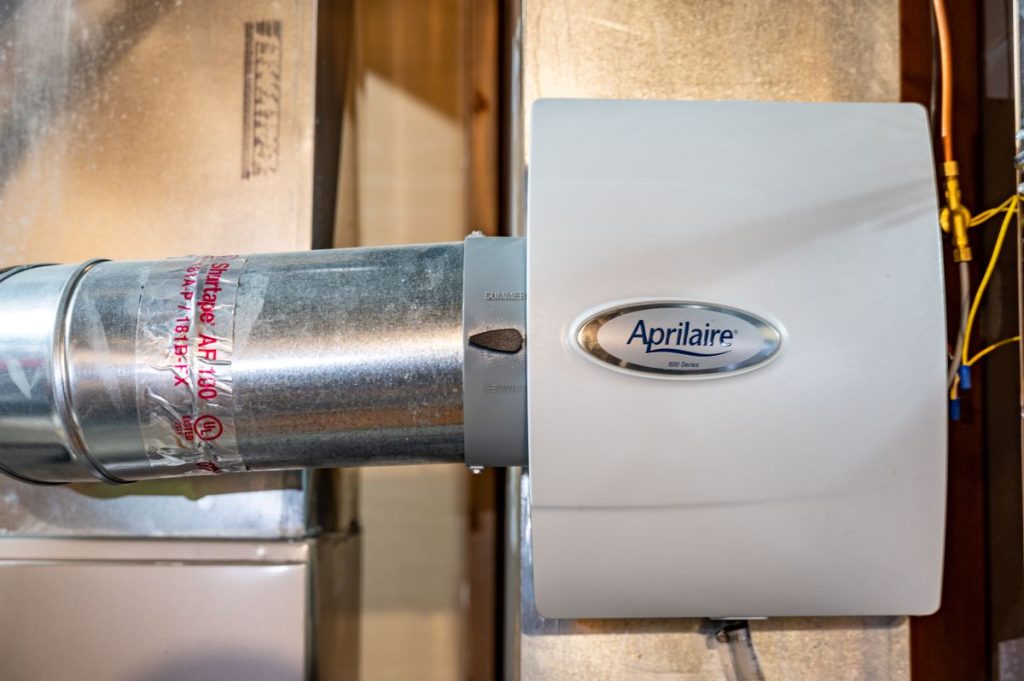
A furnace humidifier is mounted on or near your furnace’s ductwork and connected to a water supply line. As your system runs, the humidifier adds water vapor to the airflow, and the blower carries it through the ducts and into each room. There are three main types, and each works a little differently.
Bypass Humidifiers
Bypass models are the most common and budget-friendly option. They use the furnace’s own airflow, diverting some hot air through a water panel, or evaporator pad, as water flows over it. They have no motor of their own, so they’re simple and reliable, but they only add moisture when the blower is running. Because they rely on heated air, they work best with a gas furnace and can struggle to produce humidity with a heat pump, which delivers cooler air.
Fan-Powered Humidifiers
Fan-powered units work like bypass models but include an internal fan to blow air across the evaporator pad. This increases moisture output and eliminates the need for a separate bypass duct. Fan powered models are a good fit for larger homes or homes with limited space around the furnace.
Steam Humidifiers
Steam humidifiers use electric steam canisters to boil water and create steam, then release it into the ductwork. Because they produce steam on their own, they work independently of the furnace’s heat output, making a steam model a strong choice for homes with a heat pump. They offer the most precise control and the highest capacity, but they come with a higher upfront cost and use more electricity than the other types.
Choosing between these options depends on your home’s size, layout, water quality, and how dry your indoor air gets. A trained HVAC technician can measure your needs and recommend a model that fits your current system without overdoing it.
Is a Furnace Humidifier Worth It? Comparing Your Options
For many homeowners, the real question is whether a whole-home system is worth it compared to buying a few portable units. The answer usually comes down to how often you deal with dry air, how big your home is, and how much maintenance you’re willing to handle.
| Feature | Furnace Humidifier | Portable Humidifier |
| Coverage | Whole house | One room at a time |
| Water supply | Connected to your water line | Manual refilling, often daily |
| Maintenance | Panel changes once or twice a year | Frequent cleaning to prevent buildup |
| Noise | Very quiet, runs with your system | Can be noticeable in bedrooms |
| Humidity control | Central humidistat | Varies by model |
| Upfront cost | Higher, includes professional installation | Lower per unit |
The table makes it clear that a whole-home system wins on convenience and coverage, while portable units win on upfront price. A furnace humidifier is often a strong investment if you fit one or more of these situations:
- You notice static, dry skin, or sinus irritation every winter
- Your home has hardwood floors or wood furnishings you want to protect
- You’re tired of refilling and cleaning portable units
- Family members struggle with sleep or comfort when the air is dry
It’s also worth keeping a few considerations in mind. Too much humidity can lead to window condensation and mold growth, so proper installation and settings matter. Air leakage around windows, doors, and attic openings can also make it hard to hold enough humidity, and a blower door test can pinpoint where moist air escapes. Some low-cost installs rely on saddle valves to tap the water line, which are prone to water leaks over time. For homeowners in Fort Mill and surrounding areas, a professional assessment helps confirm whether the investment makes sense for your specific home before you commit.
Frequently Asked Questions About Furnace Humidifiers
Still weighing your options? These quick answers address some of the questions homeowners ask most often before adding a humidifier to their system.
What humidity level should I aim for in winter?
Most homes are comfortable between 30 and 40 percent during the coldest months. Going higher when it’s very cold outside can cause condensation on windows, so many systems lower the target as temperatures drop.
Can I install a furnace humidifier myself?
Installation involves cutting into ductwork, connecting a water line, and wiring the unit to your furnace controls. For safety and proper performance, professional installation is the best choice.
Does a furnace humidifier work with central air?
Yes. It installs on the same ductwork your air conditioner uses, though it’s typically turned off during warmer months when outdoor humidity is already high.
How often does a furnace humidifier need maintenance?
Most models need a new water panel once or twice per heating season, plus a quick inspection to check the water line, drain, and humidistat. This is easy to include in your annual furnace tune-up.
Can a furnace humidifier cause mold?
When properly sized, set, and maintained, a furnace humidifier should not cause mold growth. Problems usually happen only when moisture levels are set too high or the unit isn’t cleaned regularly.
If you have a question that isn’t covered here, a local HVAC professional can walk you through what makes sense for your home. Getting expert input upfront helps you avoid oversizing, underperformance, or unnecessary costs.
Breathe Easier This Winter With the Right Humidity
Dry winter air doesn’t have to be something you simply put up with each year. A furnace humidifier can make your home feel warmer, protect your floors and furniture, and improve indoor air quality so everyone can sleep and breathe more comfortably. The team at Panther HVAC helps homeowners in Fort Mill and surrounding areas find the right humidifier for their system, install it correctly, and keep it running smoothly season after season. If you’re ready to see whether a furnace humidifier is right for your home, contact us today to schedule a consultation.
