
 Schedule
  (803) 327-2700
 Rooftop HVAC Unit: How It Works and When to Replace It
When a commercial building’s comfort depends on equipment tucked away on the roof, it is easy to forget it is even there until something goes wrong. A rooftop HVAC unit handles heating, cooling, and ventilation for the entire space below, often running for years with only occasional attention. For business owners trying to figure out what fits their property best, understanding how these systems work and when they need replacing can prevent costly, poorly timed breakdowns.
A quick rundown of what’s ahead:
- How rooftop HVAC units function day to day
- Signs that signal it may be time for a replacement
- What affects the lifespan and performance of these units
- How rooftop systems compare to other commercial options
- Answers to common rooftop HVAC questions
The Real Impact of a Well-Functioning Rooftop System
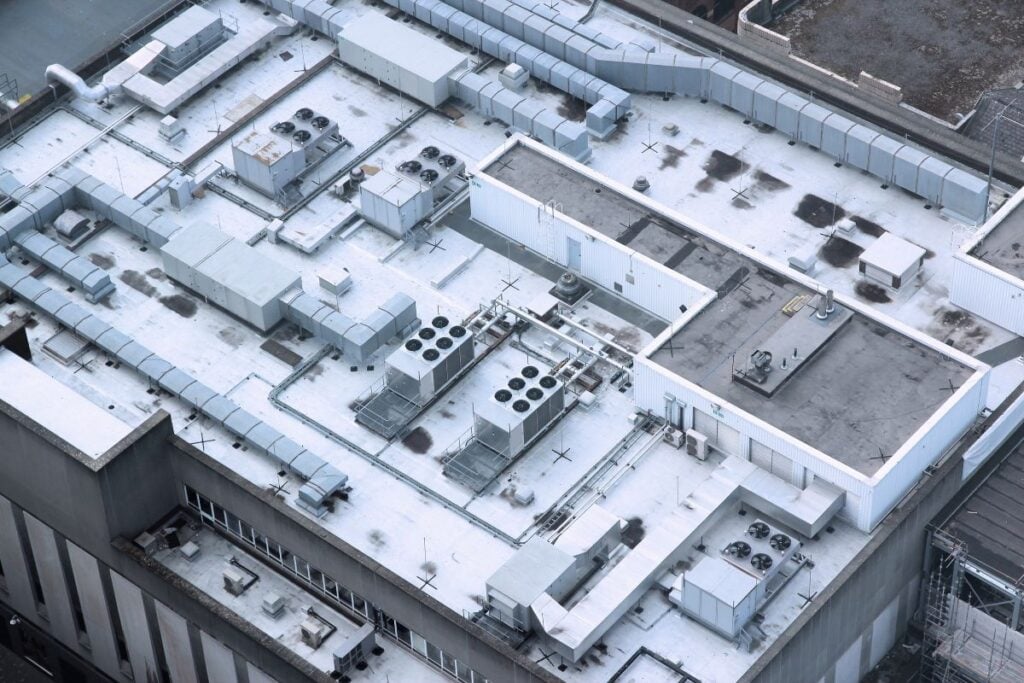
For businesses in Indian Land and surrounding areas, a rooftop unit does more work than most people realize, quietly managing air temperature and fresh air while freeing up valuable indoor space that would otherwise house bulky equipment. When it starts to falter, the effects ripple through daily operations in ways that are easy to underestimate. Comparing options across different equipment brands can also help business owners understand what separates a dependable rooftop system from one prone to problems.
- Consistent comfort: A properly functioning unit keeps air temperature steady no matter what is happening outside.
- Lower operating costs: Energy efficient equipment uses less power to maintain the same comfort level, which helps reduce operating costs over time.
- Reduced downtime: A reliable rooftop unit means fewer unexpected outages that interrupt business hours.
- Longer equipment life: Catching small issues early helps the entire system last longer before major work is needed.
These benefits are easy to take for granted until a unit starts struggling, at which point the cost of inaction usually becomes obvious fast. Staying ahead of small problems is almost always less expensive than waiting for a full breakdown.
7 Signs Your Rooftop HVAC Unit May Need Replacing
Rooftop units are built to last, but no piece of equipment runs forever. Property owners in Indian Land and surrounding areas often notice the same handful of warning signs before a unit finally gives out, and catching them early can mean the difference between a planned replacement and an emergency call. Knowing what to watch for helps property owners plan ahead instead of being caught off guard by a sudden failure. Below are the most common warning signs that a unit is nearing the end of its useful life.
1. Frequent Repairs
If a technician has been out to the same unit multiple times in a single year, that is usually a sign the equipment is struggling to keep up rather than dealing with an isolated issue.
- Repeated calls for the same or similar problem
- Repair costs that keep climbing over time
2. Rising Energy Bills
Older units lose efficiency as components wear down, which means they use more energy to produce the same amount of heating or cooling.
- Utility costs that climb without a clear explanation
- A noticeable gap between similar buildings with newer equipment
3. Inconsistent Temperatures
Uneven heating or cooling throughout a building often points to a unit that can no longer distribute conditioned air the way it once did, with some areas feeling comfortable while others run noticeably warmer or colder.
4. Excessive Noise
Grinding, rattling, or unusually loud operation typically signals worn mechanical components inside the unit, and a sudden change in sound is often the first thing people notice before other problems show up.
5. Age of the Unit
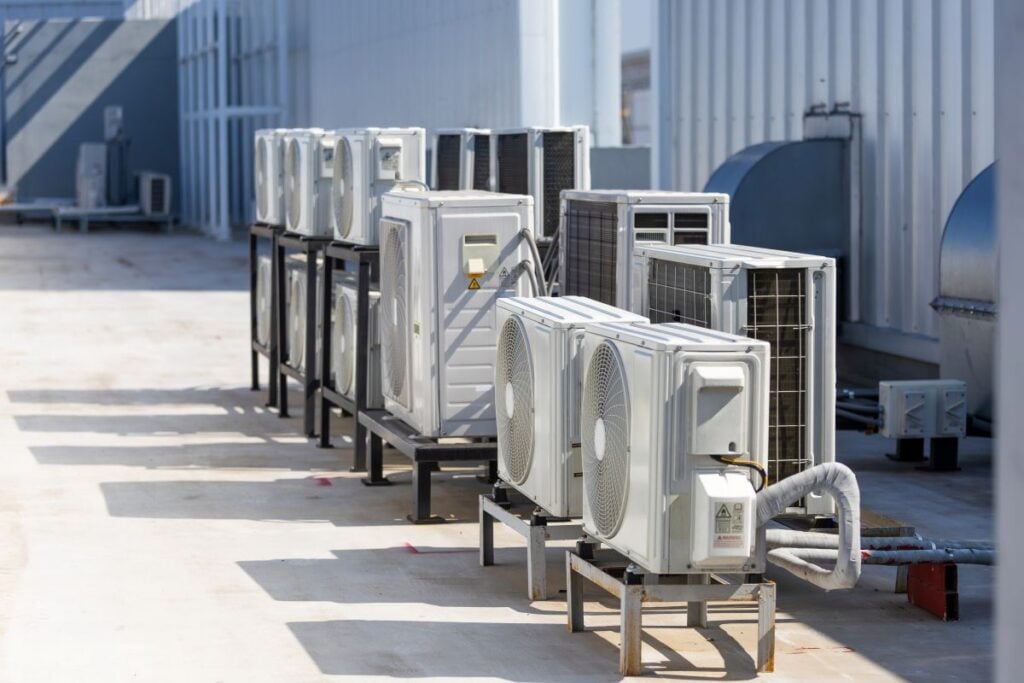
Most rooftop units are designed to last between 15 and 20 years. A unit approaching or past that range is a strong candidate for replacement even if it is still technically running, and units near the end of their life often struggle to maintain their original tonnage and capacity.
6. Visible Rust or Corrosion
Rust on the cabinet or internal components can compromise the unit’s structural integrity and often signals deeper wear that is not visible from the outside.
7. Poor Indoor Air Quality
A struggling unit may not maintain proper ventilation or filter air as effectively as it should, leading to stuffiness, odors, elevated carbon dioxide levels, or increased dust throughout the building. This is easy to overlook since it develops gradually, but occupants often notice the difference in good indoor air quality once a new unit is installed.
Any one of these signs on its own might not mean immediate replacement, but a combination of several is usually a clear signal. A professional inspection is the most reliable way to know whether repair or replacement makes the most sense.
How a Rooftop HVAC Unit Actually Works
Understanding the mechanics behind a rooftop unit makes it easier to spot problems early and have informed conversations with a technician. The primary purpose of these systems is to combine several components into one all in one design that handles heating, cooling, and ventilation in a single rooftop enclosure.
Key Components
- Compressor: Circulates refrigerant through the system to enable heating and cooling.
- Condenser and evaporator coils: Work together to transfer heat and cool the air.
- Blower and air handler: Push conditioned air through the ductwork and into the building.
- Dampers and filters: Control the mix of return air and outside air while trapping dust before it circulates indoors.
The Heating and Cooling Cycle
Refrigerant moves through the compressor, condenser, and evaporator coil in a continuous cycle, absorbing and releasing thermal energy as needed to reach the desired air temperature. In cooling mode, warm air passes over the cold evaporator coil and is redistributed as cooler air. In heating mode, some units rely on a heat pump to reverse this process, while others use natural gas or electric heating elements, with an electronic expansion valve regulating refrigerant flow for steadier performance.
Ventilation and Airflow
Once conditioned, air travels through connected ductwork to reach different areas of the building. The unit pulls in return air and mixes it with fresh outside air through an intake damper, while exhaust air is released to maintain healthy air flow. Many packaged rooftop units include an economizer that brings in outdoor air for cooling when conditions allow, and some also use thermodynamic heat recovery to capture heat from exhaust air and preheat incoming air, both of which help lower energy consumption and operating costs. Because the entire system sits in one enclosure, technicians can access every component in a single location, simplifying maintenance and repairs.
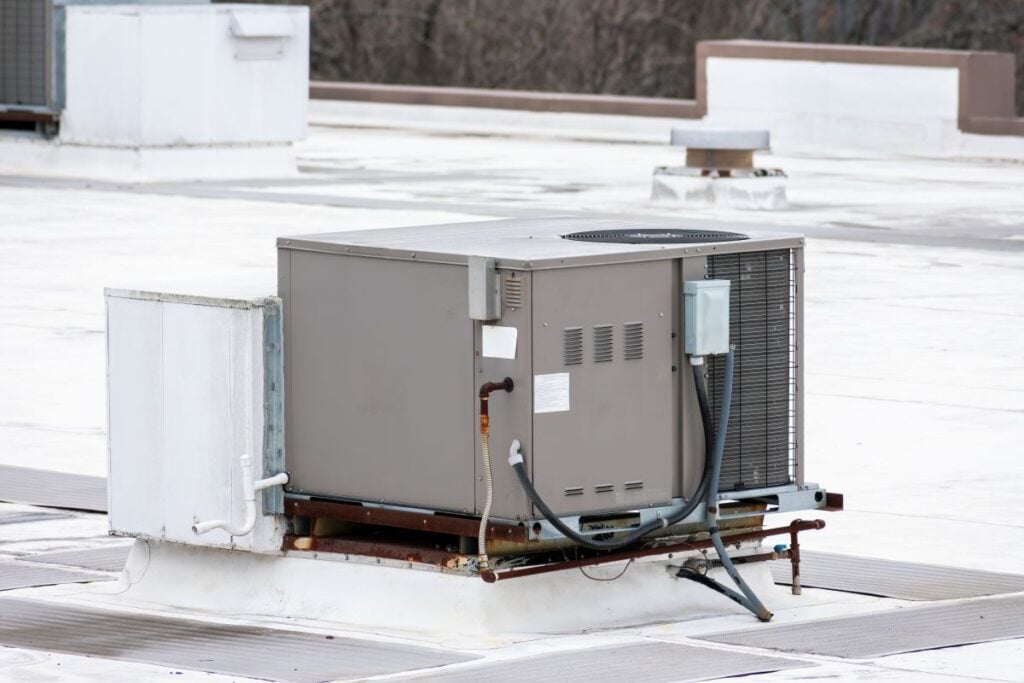
Rooftop units are engineered to handle these functions efficiently within a relatively compact footprint, which is part of why they remain a popular choice for commercial buildings of all sizes. Packaged rooftop units combine every component into a single unit, making them a practical, energy efficient choice for buildings ranging from one to eight stories, with some models configured for make-up air applications.
Rooftop Units vs Other Commercial Systems
Rooftop units are not the only option available for commercial properties, and comparing them to alternatives helps put their advantages and limitations into perspective. The main difference between systems usually comes down to where equipment lives and how much flexible zoning a building needs.
| Factor | Rooftop Unit | Split System |
| Space usage | Frees up interior space | Requires separate indoor mechanical rooms |
| Maintenance access | Centralized on the roof | Split between indoor and outdoor units |
| Zoning | Typically one unit per zone, with multiple units for larger buildings | Flexible zoning across separate indoor units |
| Best for | Single-story retail, office, and restaurant buildings | Smaller spaces with limited roof access |
| Noise | Minimal indoor noise | Some compressor noise possible near indoor unit |
Installation is another factor worth weighing before choosing a system. Rooftop units can weigh several hundred pounds, so a structural assessment and cranes are typically needed to confirm the roof can support the load and lift the unit into place. Waterproofing around unit penetrations helps prevent roof damage or leaks, and planning for rooftop access ahead of time makes ongoing maintenance easier. Because they sit in a visible, elevated spot, RTUs can also be somewhat more exposed to vandalism or theft than equipment tucked away in mechanical rooms.
For many properties in Indian Land and surrounding areas, a rooftop unit remains the more practical choice simply because it keeps equipment out of the way while still delivering reliable operation, and its modular scalability makes it a popular fit for new construction as a building expands. Buildings with unique layouts or limited roof access may find a different system type better suited, which is why professional guidance is worth the time before committing to any option.
Frequently Asked Questions About Rooftop HVAC Units
Property owners often have similar questions when deciding whether to repair or replace a rooftop unit. Here are answers to a few of the most common ones.
How long does a rooftop HVAC unit typically last?
Most units last between 15 and 20 years with regular maintenance, though heavy use or inconsistent upkeep can shorten that lifespan.
How often should a rooftop unit be serviced?
Most manufacturers recommend at least two maintenance visits per year, ideally before the busiest heating and cooling seasons.
Is it better to repair or replace an aging rooftop unit?
It depends on the age of the unit and the frequency of repairs. Older units with recurring issues are usually better candidates for replacement than repair.
Can a rooftop unit be upgraded instead of fully replaced?
In some cases, individual components can be upgraded to improve efficiency without a full system replacement, though this depends on the age and condition of the existing unit.
Do rooftop units work well in all climates?
Rooftop units perform well in a wide range of climates, though proper sizing and insulation matter for maintaining efficiency in extreme heat or cold.
Can one rooftop unit serve multiple zones?
A basic model typically serves a single zone, but installing multiple units gives a building flexible zoning across different areas.
These questions come up often, but every building has its own quirks worth discussing with a professional before making a final decision.
Trust Panther HVAC With Your Rooftop System
A rooftop HVAC unit plays a big role in daily comfort and operations, and knowing when to repair versus replace it can save significant money and hassle down the road. Businesses in Indian Land and surrounding areas rely on these systems year-round, which makes staying ahead of wear and tear well worth the effort. Panther HVAC has helped property owners evaluate, maintain, and replace rooftop systems that keep their buildings running smoothly. If your rooftop unit is showing signs of trouble or you simply want a professional opinion, contact us today to talk through the best path forward.
