
 Schedule
  (803) 327-2700
 Why Does My AC Smell? (7 Common Causes & Fixes)
If you have ever turned on your air conditioner and immediately noticed an unpleasant odor, you are not alone. Many homeowners ask, why does my AC smell, especially during peak cooling season. Strange AC odors can signal anything from minor maintenance needs to more serious system concerns. If the smell lingers or worsens, it may be time to explore professional solutions like those outlined when scheduling air conditioning service for odor issues.
In this guide, you will learn:
- 7 common causes of AC smells
- How to identify different types of odors
- Simple fixes you can try first
- When to call a professional
- How to prevent future odor problems
Why AC Odors Should Never Be Ignored
An unusual smell coming from your vents is more than just a nuisance. Your HVAC system circulates air throughout your entire home. If that air carries unpleasant or musty odors, it can affect comfort, indoor air quality, and even safety.
For homeowners in Lake Wylie, SC and surrounding areas, humidity and long cooling seasons can increase the likelihood of odor issues developing inside air handlers and ductwork.
Addressing AC smells early provides several important benefits:
- Health Protection: Prevents mold spores, bacteria, or contaminants from circulating indoors.
- Improved Comfort: Fresh airflow enhances the overall living environment.
- System Protection: Early repairs prevent more expensive mechanical damage.
- Energy Efficiency: Clean components operate more efficiently.
- Peace of Mind: Eliminates uncertainty about potential safety hazards.
If your system smells unusual, identifying the type of odor is the first step toward solving the problem.
7 Common Causes of AC Smells and How to Fix Them
Different odors often point to specific underlying issues. Below are seven of the most common reasons homeowners notice unpleasant smells when running their air conditioner.
1. Musty or Moldy Smell
A musty odor is one of the most common AC complaints. This usually indicates mold or mildew growth inside the evaporator coil, drain pan, or ductwork.
Moisture buildup creates an ideal environment for microbial growth, especially in humid climates.
Possible causes include:
- Clogged condensate drain line
- Dirty evaporator coil
- Excess indoor humidity
- Poor airflow
Fixes may involve cleaning the coil, clearing the drain line, or installing enhanced filtration or dehumidification solutions.
2. Burning Smell When AC Starts
If you notice a brief burning odor when the system first turns on, it may simply be dust burning off internal components after a period of inactivity.
However, persistent burning smells can indicate:
- Overheated wiring
- Failing motor components
- Electrical short circuits
If the smell continues beyond a few minutes, turn off the system and seek professional inspection.
3. Rotten Egg or Sulfur Smell
A rotten egg odor is often associated with natural gas leaks. While central air systems do not produce gas, a nearby gas furnace or gas line could be the source.
If you detect this smell:
- Leave the home immediately
- Avoid turning electrical switches on or off
- Contact emergency services or your gas provider
Safety should always come first.
4. Dirty Sock Smell
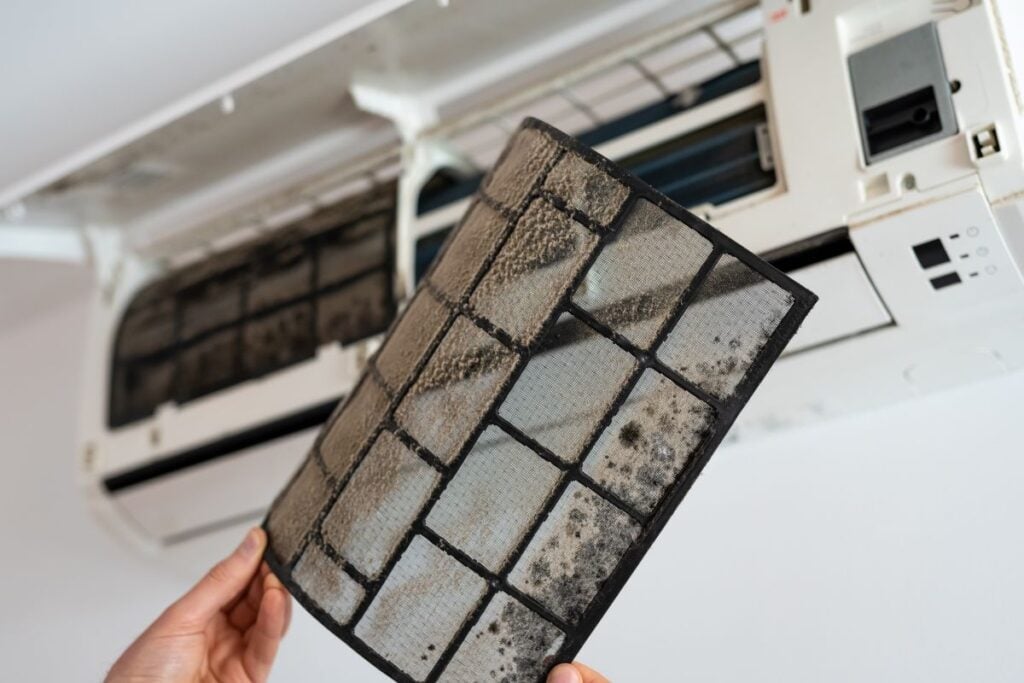
The so called dirty sock smell resembles damp laundry or sour fabric.
This odor often develops when:
- Bacteria grow on the evaporator coil
- Moisture lingers between cooling cycles
- Filters are dirty or neglected
Professional coil cleaning or UV light installation can help reduce bacterial growth.
5. Chemical or Sweet Smell
A sweet or chemical odor could signal refrigerant leaks or insulation issues.
Possible warning signs include:
- Reduced cooling performance
- Ice buildup on refrigerant lines
- Hissing sounds
Refrigerant issues require licensed HVAC technicians for proper diagnosis and repair.
6. Exhaust or Smoky Odor
An exhaust like smell may indicate overheated components or external sources being drawn into ductwork.
Potential contributors:
- Electrical motor failure
- Debris near outdoor unit
- Nearby external smoke entering return air
Prompt inspection is recommended to prevent further damage.
7. Sewage or Stagnant Water Smell
If your AC emits a sewage like odor, a clogged condensate drain line may be the culprit.
Standing water in the drain pan can cause:
- Bacterial growth
- Drain backups
- Water damage
Clearing the drain line and disinfecting affected areas typically resolves the issue.
How to Identify the Type of Smell in Your Home
Not all odors are created equal. Understanding the difference helps determine whether the issue is minor or urgent.
Short Term vs Persistent Odors
Short lived smells when the system first starts may be harmless dust burning off.
Persistent smells that continue throughout operation often signal underlying problems.
Odor Location
Ask yourself:
- Is the smell strongest near vents?
- Does it seem stronger near the air handler?
- Is it noticeable outside near the condenser?
Pinpointing the source helps narrow the cause.
Timing and Conditions
Does the smell occur:
- Only during cooling?
- After heavy rain?
- During high humidity days?
Patterns provide valuable clues for diagnosis.
For homeowners in Lake Wylie, SC and surrounding areas, high summer humidity can intensify musty odors if systems are not maintained regularly.
Preventing Future AC Odor Problems
Routine maintenance is the best defense against recurring smells.
Preventive steps include:
- Changing air filters regularly
- Scheduling annual professional maintenance
- Keeping the condensate drain line clear
- Ensuring proper airflow throughout the home
- Monitoring indoor humidity levels
Investing in maintenance reduces the risk of mold buildup and electrical issues.
Consider Enhanced Indoor Air Quality Solutions
If odor problems persist, upgrading your system with additional indoor air quality products may help.
Options include:
- UV light systems to reduce microbial growth
- High efficiency air filtration
- Whole home dehumidifiers
These solutions support cleaner airflow year round.
When to Call a Professional
While some odor issues are minor, others require immediate professional attention.
Call for service if you notice:
- Persistent burning smells
- Chemical or refrigerant odors
- Repeated musty smells despite filter changes
- Water leaks near the indoor unit
Delaying repairs can increase damage and repair costs over time.
A professional technician will:
- Inspect coils and drain systems
- Test electrical components
- Evaluate refrigerant levels
- Assess ductwork condition
For homeowners in Lake Wylie, SC and surrounding areas, timely service helps ensure safe and efficient cooling throughout the long summer season.
Comparing Common AC Smells and Their Urgency
Below is a general comparison to help determine how quickly you should act:
Musty Smell:
- Common cause: Mold or mildew
- Urgency: Moderate
- Action: Schedule cleaning and inspection
Burning Smell:
- Common cause: Electrical or motor issue
- Urgency: High if persistent
- Action: Shut off system and call technician
Rotten Egg Smell:
- Common cause: Gas leak
- Urgency: Emergency
- Action: Leave home and contact authorities
Chemical Smell:
- Common cause: Refrigerant leak
- Urgency: High
- Action: Professional repair required
Understanding urgency levels helps you respond appropriately.
Protect Your Comfort and Indoor Air Quality
Unpleasant AC smells are often the first sign that something inside your system needs attention. Whether the cause is mold, electrical wear, or refrigerant concerns, early diagnosis prevents larger problems. Maintaining clean components and proper airflow ensures healthier indoor air and reliable cooling performance.
If you are experiencing persistent odors and asking why your AC smells, the experienced team at Panther HVAC is ready to help. For trusted service in Lake Wylie, SC and surrounding areas, contact us today to schedule a professional evaluation and restore clean, fresh airflow to your home with Panther HVAC.
