
 Schedule
  (803) 327-2700
 Window AC Unit Leaking Water? (6 Causes and Quick Fixes)
Finding a puddle beneath your window unit is enough to make any homeowner uneasy, especially when it starts soaking into the windowsill or dripping onto the floor below. A window ac unit leaking water is usually not a sign of a major breakdown, but it does need attention before it damages your wall, flooring, or the unit itself. This guide walks through the most common causes and the quick fixes homeowners can try, along with when a persistent leak calls for professional repair.
What you’ll learn:
- Why a leaking window AC unit is worth addressing right away
- The most common causes behind water leaking from your unit
- Quick fixes you can try before calling for service
- How to tell the difference between normal condensation and a real problem
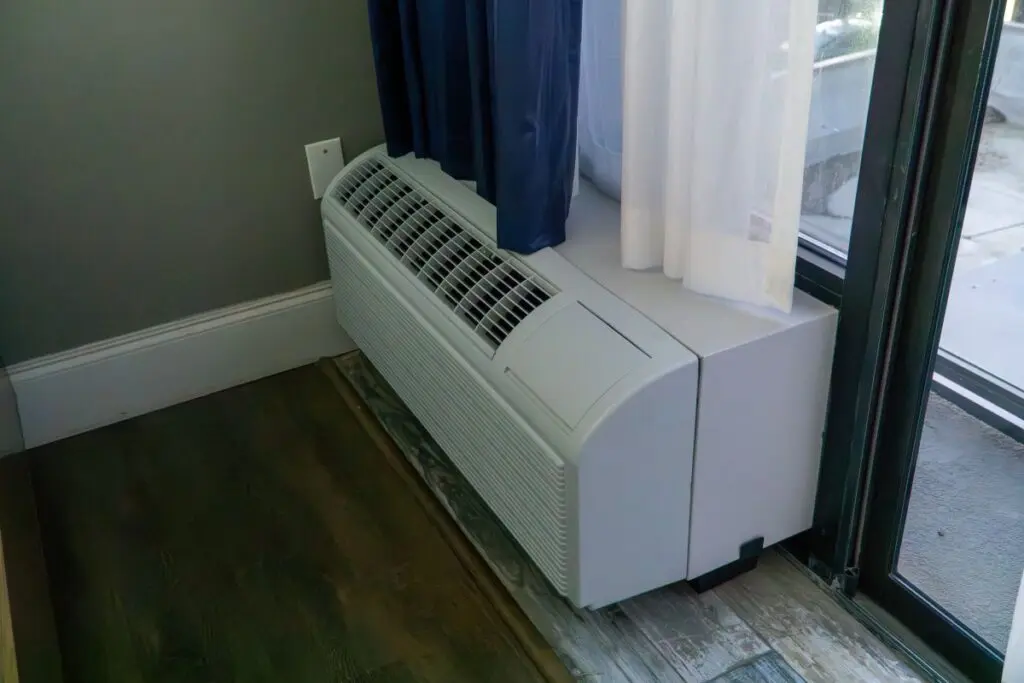
Why a Window AC Unit Leaking Water Should Not Be Ignored
A little condensation is completely normal for any window air conditioner, but water pooling indoors or streaming down your exterior wall is a different story. Left unchecked, that moisture can lead to damage that costs far more to repair than the original leak ever would have. For homeowners in Fort Mill and surrounding areas, where humidity levels climb quickly in the warmer months, catching a leaking unit early is one of the simplest ways to protect your home.
- Protects your walls and flooring: Water leaking indoors can warp wood, stain drywall, and encourage mold growth if it goes unaddressed.
- Preserves unit performance: A leak is often tied to an underlying issue that, left alone, can reduce cooling efficiency over time.
- Prevents electrical hazards: Water near electrical components is a safety concern that should never be dismissed.
- Saves money long term: Diagnosing a small leak early is almost always cheaper than repairing water damage or replacing the unit entirely.
None of this means every leak is a crisis. In most cases, the cause is straightforward and falls into one of a handful of common categories, which makes it worth working through the likely culprits before assuming the worst.
6 Causes of a Window AC Unit Leaking Water
Window units can leak for a range of reasons, from a simple installation issue to a more involved mechanical problem. Reviewing the most frequent causes below can help you figure out which one applies to your situation.
1. Improper Installation or Tilt Angle
Window air conditioners are designed to tilt slightly toward the outside so condensation drains away from your home rather than back into it. If the unit is installed level or tilted the wrong direction, water collects on the indoor side and eventually leaks into the room.
- Often the result of a rushed or DIY installation
- Can usually be corrected by adjusting the unit’s angle in the window frame
- A slight downward slope toward the exterior is typically all that is needed
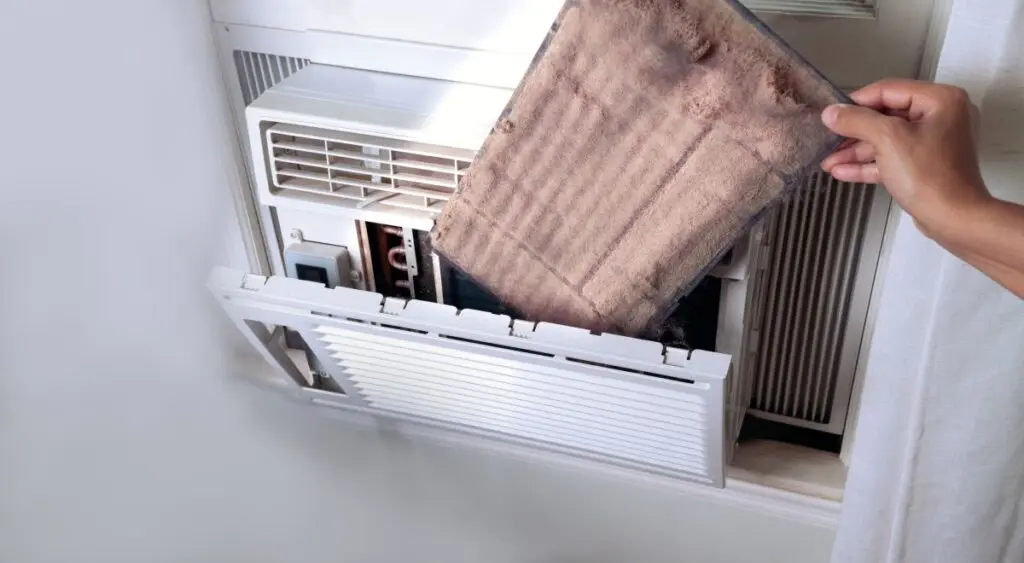
2. A Clogged or Dirty Air Filter
A dirty air filter restricts airflow across the evaporator coil, which can cause condensation to build up faster than the unit’s drainage system can handle. This is one of the easiest causes to prevent, since it comes down to routine maintenance rather than a mechanical failure.
- Restricted airflow often leads to excess moisture collecting inside the unit
- A clogged filter can also contribute to reduced cooling performance
- Cleaning or replacing the filter every month during heavy use season helps prevent this
3. A Blocked Drain Hole or Weep Hole
Most window units have a small drain hole or weep hole on the underside designed to release excess condensation to the outside. When that opening becomes blocked by dust, debris, or dried mineral buildup, water has nowhere to go except back into your home.
- Debris buildup is the most common cause of a blocked drain hole
- Leaking that appears suddenly after months of normal operation often points here
- Clearing the opening with a thin wire or pipe cleaner is usually all it takes
4. A Frozen Evaporator Coil
When the evaporator coil freezes due to restricted airflow, low refrigerant, or extended use in cooler outdoor temperatures, the ice eventually melts and produces more water than the drainage system is designed to handle. This overflow often shows up as sudden, heavier leaking rather than a slow, steady drip.
- Frequently caused by a dirty filter, blocked vents, or running the unit in cool weather
- Turning the unit off to let the coil thaw is a reasonable first step
- If freezing returns after thawing, a technician should investigate further
5. A Cracked or Damaged Drain Pan
The drain pan collects condensation before it exits the unit, and over time it can crack, warp, or corrode, especially in older units. Once damaged, the pan can no longer hold water properly, allowing it to leak out before reaching the drainage system.
- More common in units that are several years old
- Often requires replacing the pan or the unit itself depending on severity
- Rust or visible cracks are usually easy to spot during an inspection
6. Extreme Humidity Levels
Even a properly installed and well maintained unit can leak more than usual during periods of extremely high humidity, since the system is pulling more moisture out of the air than normal. This is less a malfunction and more a sign that the unit is working exactly as intended under demanding conditions.
- Common during the most humid stretches of summer
- Usually resolves on its own once humidity levels drop
- A dehumidifier can help reduce strain on the AC unit during peak humidity
Working through these six causes in order, starting with the simplest checks like filter condition and installation angle, helps most homeowners narrow down the source of the leak quickly. From there, a few quick fixes can often resolve the issue without a service call.
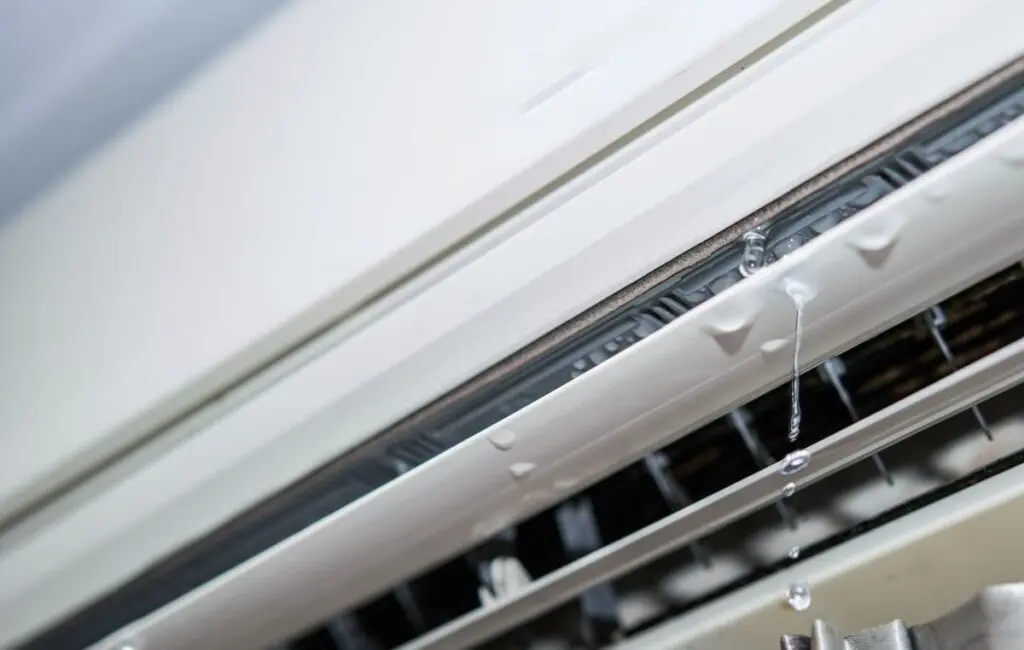
Quick Fixes You Can Try Before Calling for Service
Many window AC leaks can be resolved with a few simple checks that take only a few minutes. Before assuming the worst, it is worth ruling out the most common and easiest to fix causes first.
- Check the tilt: Confirm the unit slopes slightly toward the outside, and adjust the mounting brackets or shims if it does not.
- Inspect the filter: Remove and clean or replace the filter if it looks dirty, since this is one of the quickest fixes available.
- Clear the drain hole: Use a thin, flexible wire to gently clear any debris blocking the drainage opening on the underside of the unit.
- Let the coil thaw: If you notice ice buildup, turn the unit off for a few hours and allow it to fully thaw before restarting.
- Reduce indoor humidity: Running a dehumidifier alongside your AC during especially humid stretches can ease the load on the unit.
If these quick fixes do not stop the leak, or if the problem returns shortly after, it usually points to a more involved issue like a cracked drain pan or a mechanical fault that needs a closer look from a professional.
Front Leaking vs. Back Leaking: What Each One Means
Where the water appears on your unit can tell you a lot about what is actually causing it, so it helps to know what each pattern typically indicates. Understanding this distinction can save you time when troubleshooting or describing the issue to a technician.
| Leak Location | Likely Cause | Typical Fix |
| Leaking from the front (indoors) | Improper tilt, blocked drain hole, or frozen coil | Adjust tilt, clear drain hole, or thaw coil |
| Leaking from the back (outdoors) | Normal condensation drainage | Usually no action needed |
| Leaking from underneath | Cracked or damaged drain pan | Pan replacement or professional repair |
| Leaking heavily after ice buildup | Frozen evaporator coil thawing | Turn off unit, allow full thaw, address airflow |
Homeowners throughout Fort Mill and surrounding areas often find that simply noting where the water is coming from narrows the list of likely causes considerably. If the leak keeps returning despite trying the fixes above, that pattern is usually the clearest sign that a professional inspection is worth scheduling.
Let Panther HVAC Help Stop the Leak for Good
A window AC unit leaking water is rarely an emergency, but it is also not something to leave unaddressed, since the underlying cause can affect both your home and the unit’s performance over time. Whether the fix turns out to be as simple as adjusting the tilt or as involved as replacing a cracked drain pan, catching the issue early keeps small problems from becoming expensive ones. At Panther HVAC, we help homeowners throughout Fort Mill and surrounding areas diagnose leaking AC units quickly and get them running the way they should.
If your window unit has started leaking and the quick fixes above have not solved it, do not wait for the damage to spread. Contact us today and let our team track down the cause so you can get back to reliable, leak free cooling.